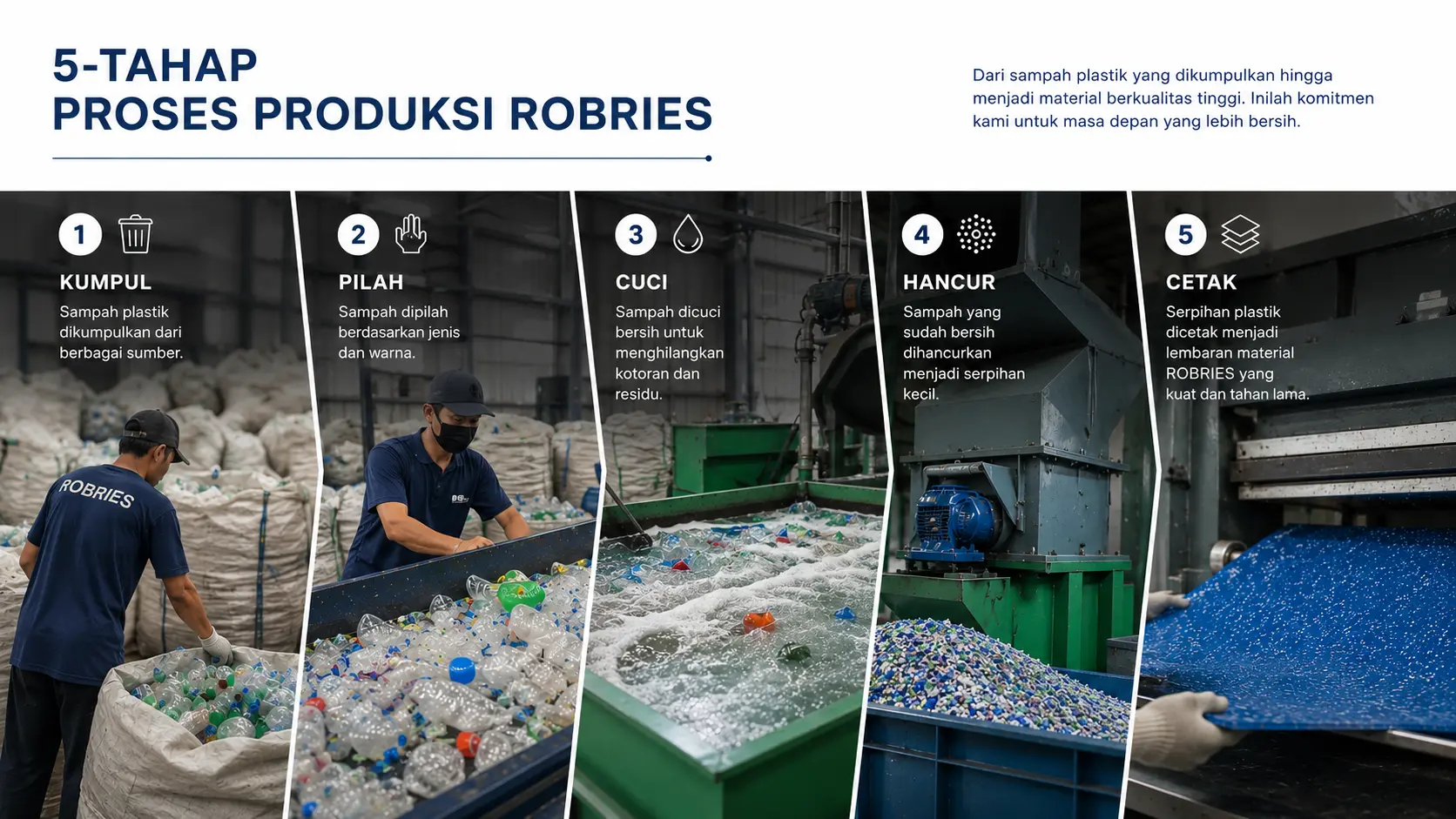

The recycled plastic production process into furniture material runs through five stages: waste collection, sorting by plastic type, washing off contamination, shredding into small pieces, then heating and molding into solid sheets or panels. Type sorting (HDPE vs LDPE) determines final strength. The result is spec-ready sheets that can be cut and shaped. Robries applies this process to produce quality material with specification documentation.
Why understanding the process matters
Understanding the production process helps architects and project owners assess material quality. Recycled plastic processed with the right technique yields strong, consistent material — while poor processing yields brittle material. Here are the main stages.
Stages 1-2: collection and sorting
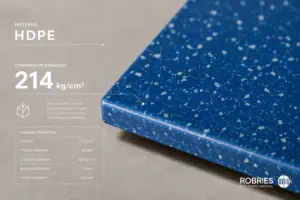
The process begins with collecting plastic waste, then sorting by type. This sorting is crucial: HDPE (bottle caps, crates) and LDPE (flexible plastics, gallon caps) have different characteristics that determine final material strength — HDPE up to 214 kg/cm2, LDPE about 93 kg/cm2.
Stages 3-4: washing and shredding
Sorted plastic is cleaned of dirt and contamination to ensure final quality. Once clean, the plastic is shredded into small pieces so it can be processed evenly in the heating stage.
Stage 5: heating and molding
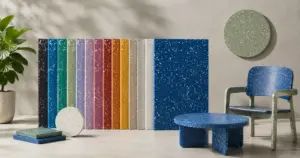
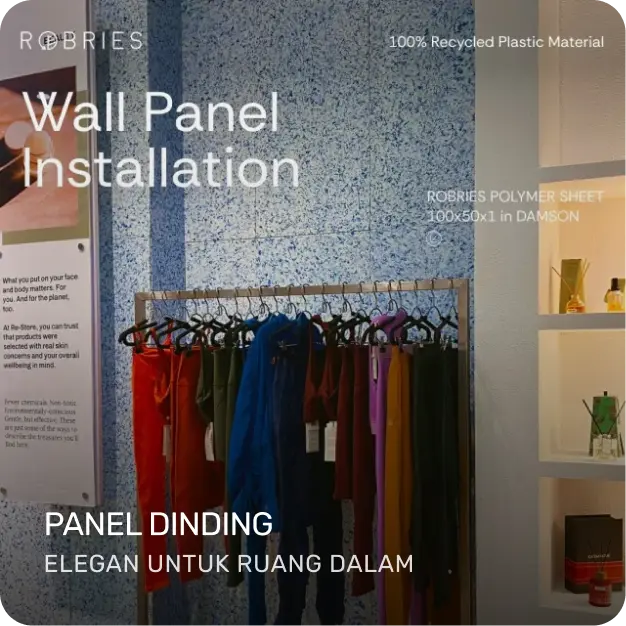
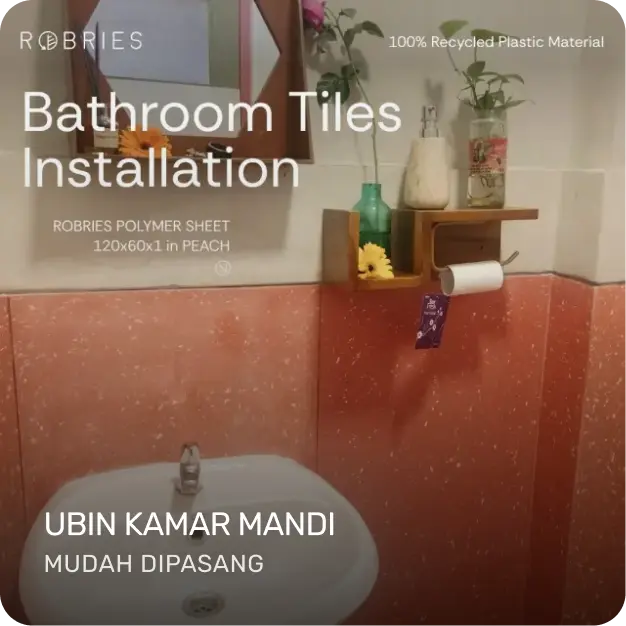
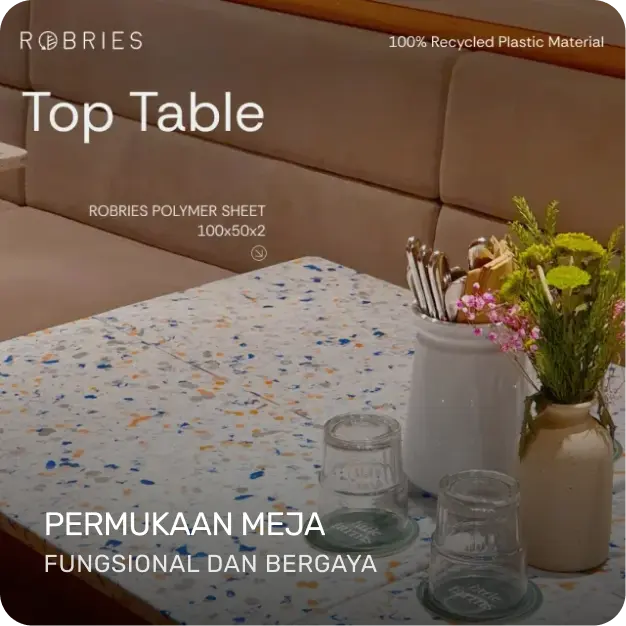
Plastic pieces are heated and molded back into solid sheets or material blocks. The result is recycled plastic panels with unique patterns (terrazzo, marbled) ready for further processing — cut, shaped, and finished into furniture and interior elements. Robries provides complete spec documentation for this output.
Quality control at each stage
Final material quality is determined by control at every stage. Careful sorting ensures plastic types are not mixed. Thorough washing removes contaminants that can weaken material bonds. Proper heating temperature and pressure ensure plastic melts evenly without degradation. Material produced with good quality control yields sheets consistent in strength and appearance — an important reason to choose a producer that documents its process.
How the process shapes aesthetics
Recycled material’s unique visual patterns — terrazzo, marbling, mosaic — are not accidental but a result of how colored plastics are mixed and molded. Producers can control part of this character: color ratio, particle size, and molding technique affect the final look. This understanding lets designers collaborate with producers to achieve a certain aesthetic, rather than merely accepting a random result.
The energy side and production impact
Recycling plastic generally requires less energy than producing virgin plastic from fossil feedstock. However, the actual impact depends on the energy source and process efficiency. Producers transparent about their process help clients calculate environmental impact accurately for sustainability reporting. This is part of a holistic approach to truly responsible material.
What separates quality material
As a practical summary: The five-stage production process—collection, sorting, washing, shredding, heating-molding—with quality control at each stage determines the strength and consistency of the final material. To validate whether the material fits your project needs, the most effective step is to assess it directly — Robries provides a free physical sample plus a technical spec sheet delivered to your studio or project site within 3 working days, with no purchase obligation. With a sample in hand, design and procurement teams can evaluate color, texture, weight, and dimensional fit before making a budget decision. An early discussion of volume, dimensions, and timeline also helps the material team prepare an accurate estimate and maintain consistency across orders.
Questions to vet a prospective supplier
When evaluating a recycled-material supplier, a few key questions help assess quality: where the plastic comes from and how it is sorted, what plastic type is used (HDPE or LDPE), how quality control is performed, and whether technical specification documentation is available. A producer transparent about its process and able to provide a spec sheet usually signals more consistent production standards, reliable for commercial projects.
Five stages and their quality checkpoints
The recycled plastic production process into furniture material runs through five stages, each with quality control. (1) Collecting waste from sorted sources. (2) Sorting by type—crucial because HDPE (214 kg/cm2) and LDPE (93 kg/cm2) determine final strength; careful sorting ensures types are not mixed. (3) Thorough washing removes contaminants that can weaken material bonds. (4) Shredding into small flakes for even processing. (5) Heating & molding at the right temperature-pressure so plastic melts evenly without degradation. The result is solid, uniquely patterned sheets consistent in strength and appearance.
From aesthetics to assessing the producer
The unique visual patterns (terrazzo, marbling, mosaic) are not accidental—color ratio, particle size, and molding technique affect the final look, letting designers collaborate with producers to achieve a certain aesthetic. When evaluating a recycled-material producer, ask key questions: where the plastic comes from and how it is sorted; which type is used (HDPE/LDPE); how quality control is performed; whether technical specification documentation is available. A producer transparent about its process and able to provide a spec sheet usually signals more consistent production standards, reliable for commercial projects.
How Robries runs its process
Robries applies a controlled production process at every stage — from sorting plastic types to molding — to produce material consistent in strength and appearance. Every sheet comes with specification documentation so architects and contractors can process it confidently with common tools. Learn more about our material or request a sample to assess its quality directly.
Five stages: waste collection, sorting by plastic type, washing, shredding into small pieces, then heating and molding into solid sheets/panels.
Because type determines final strength: HDPE has impact strength up to 214 kg/cm2, higher than LDPE (~93 kg/cm2). Sorting ensures the material fits its application.
The output is spec-ready sheets/panels that are then cut, shaped, and finished into furniture and interior elements per the design.
Quality control at every stage: careful sorting, thorough washing, and proper heating temperature and pressure. A producer that documents its process yields consistent material.
Partly. Color ratio, particle size, and molding technique affect the final look, letting designers collaborate with producers to achieve a certain aesthetic.