
A recycled plastic vs wood furniture material comparison shows recycled plastic (RPS) wins on five aspects: termite resistance (wood is vulnerable), water and weather resistance (wood is limited), impact strength up to 214 kg/cm2, 100% recycled sustainability value, and recyclability. Wood leads on certain natural visual warmth but needs routine upkeep. For intensive commercial and outdoor applications, recycled plastic is more consistent. Robries offers free physical samples for direct comparison.
Why material comparison matters
Choosing furniture material for commercial projects means weighing durability, maintenance, aesthetics, and environmental impact. This article compares recycled plastic (Robries Polymer Sheet/RPS) with wood and HPL — two common conventional materials — so architects and project owners can decide with data.
The five key aspects compared
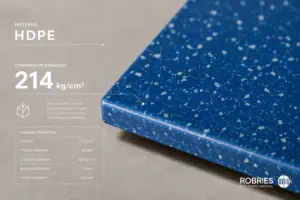
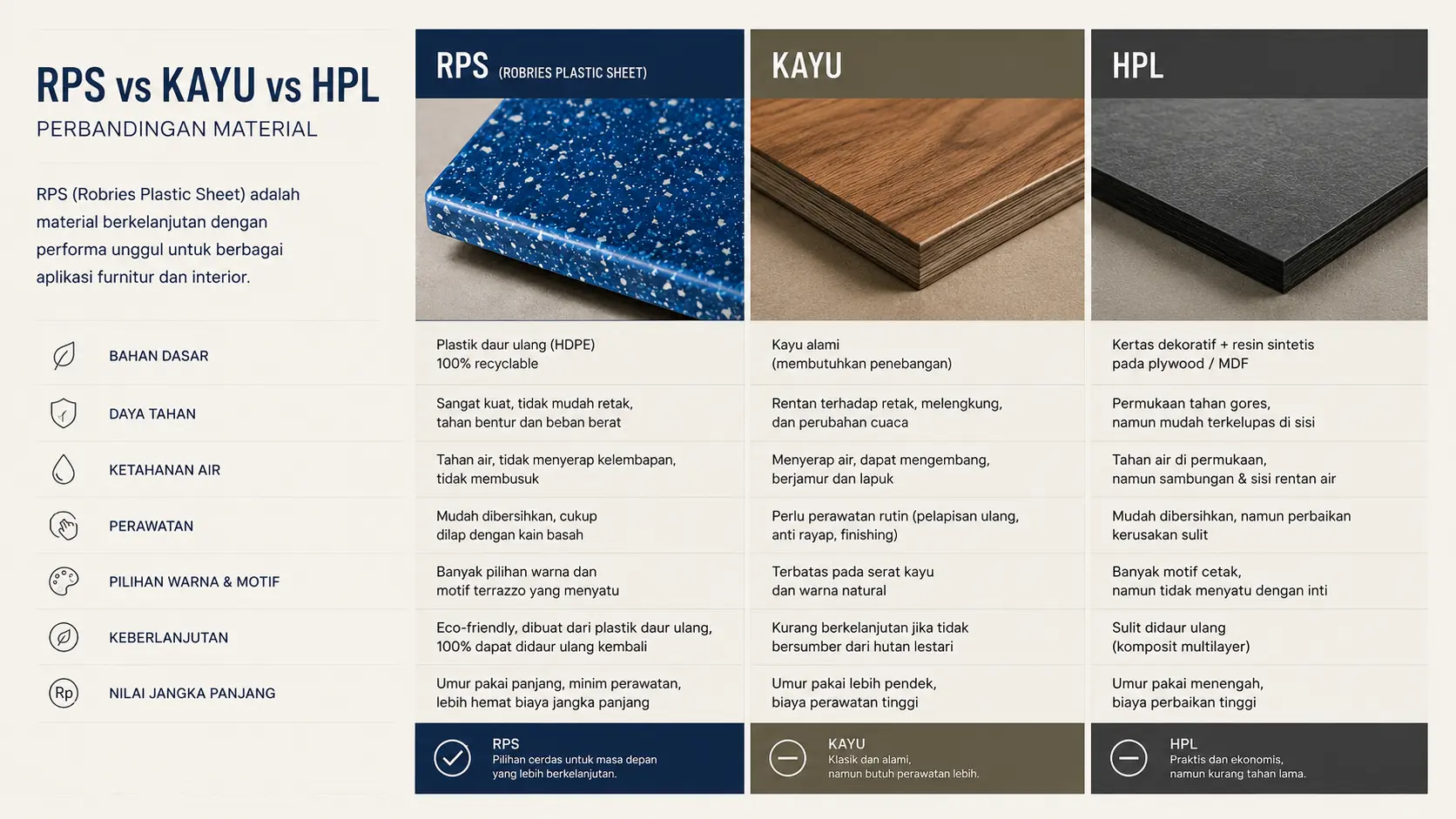
On termite resistance, RPS resists while wood is vulnerable. On water and weather resistance, RPS leads while wood is limited. On impact strength, RPS reaches 214 kg/cm2 (HDPE) while wood varies. On sustainability/ESG value, RPS is 100% recycled while wood/HPL is low. On recyclability, RPS can be recycled again while wood/HPL cannot.
Where wood still has the edge
Objectivity matters: wood has a certain natural visual warmth and is familiar to many craftsmen. But wood needs routine upkeep, is vulnerable to termites and moisture, and is inconsistent for intensive outdoor use. RPS offers consistency and minimal maintenance in return.
Which material for which situation
For intensive commercial applications, outdoor areas, and projects with ESG goals, recycled plastic is generally the more consistent choice. To judge for yourself, Robries provides a free physical sample plus technical spec sheet delivered to your studio within 3 working days, so the comparison can be made directly on real material.
Count total cost, not the upfront price
A fair material comparison must look at total cost of ownership, not just purchase price. Wood may be cheaper upfront but requires periodic recoating, is termite-prone, and may need replacing sooner in humid or outdoor settings. HPL is relatively affordable but can peel at the edges and is not as water-resistant as solid plastic. RPS has a certain upfront cost, but minimal maintenance and long life often make it more economical over 5-10 years for intensive applications.
Scenarios: when to choose each
No material wins in every situation. For prestigious dry interiors where natural wood aesthetics are desired, solid wood remains relevant. For flat surfaces on a tight budget in dry areas, HPL can suffice. But for outdoor areas, wet areas (poolside, commercial bathrooms), intensive public furniture, and projects with sustainability goals, RPS is generally the most consistent choice because it combines durability and recycled value.
How to test material objectively
The best material decision is made by testing real material, not just reading specs. Order samples of several materials and test directly: scratch resistance with a coin, response to water and stains, weight, and appearance under real room lighting. Robries provides a free physical sample plus spec sheet to the studio within 3 working days, so the comparison can be done side-by-side with other materials before a budget commitment.
The crux before you decide
As a practical summary: Compared with wood and HPL, recycled plastic excels in termite resistance, water resistance, impact strength, and recycled value—most consistent for intensive and outdoor applications. To validate whether the material fits your project needs, the most effective step is to assess it directly — Robries provides a free physical sample plus a technical spec sheet delivered to your studio or project site within 3 working days, with no purchase obligation. With a sample in hand, design and procurement teams can evaluate color, texture, weight, and dimensional fit before making a budget decision. An early discussion of volume, dimensions, and timeline also helps the material team prepare an accurate estimate and maintain consistency across orders.
RPS vs wood vs HPL across five aspects
Choosing commercial furniture material means weighing several aspects at once. On termite resistance, RPS resists while wood is vulnerable and HPL varies. On water & weather resistance, RPS leads, wood is limited, HPL can swell/peel when wet. On impact strength, RPS reaches 214 kg/cm2 (HDPE), wood varies, HPL depends on substrate. On sustainability value, RPS is 100% recycled, wood depends on source, HPL is generally low. On recyclability, RPS can be recycled again, wood/HPL generally cannot. For intensive commercial and outdoor applications, RPS is generally the most consistent choice.
Total cost of ownership and how to test it
A fair comparison looks at total cost of ownership (TCO) over 5-10 years, not purchase price. Wood may be cheap upfront but needs periodic recoating and may need replacing sooner in humid/outdoor settings. HPL is affordable but can peel. RPS has a certain upfront cost, but minimal maintenance and long life often make it more economical for intensive applications. The best decision is made by testing real material: order samples of several materials and test scratch resistance, water/stain response, weight, and appearance under real room lighting. Robries provides a free physical sample + spec sheet to the studio within 3 working days for side-by-side comparison before a budget commitment.
Compare for yourself with a Robries sample
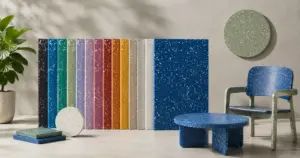
The best way to judge whether recycled plastic suits your project is to compare it directly with other materials. Robries provides a free physical sample of Robries Polymer Sheet plus a technical spec sheet, delivered to your studio within 3 working days with no purchase obligation. With a sample in hand, you can test durability, texture, and appearance side-by-side with wood or HPL before deciding.
RPS resists termites, water, and weather, has impact strength up to 214 kg/cm2, is 100% recycled, and can be recycled again — while wood is termite-vulnerable and needs routine upkeep.
Yes. Wood has a certain natural visual warmth and is familiar to craftsmen. But for intensive commercial and outdoor applications, recycled plastic is more consistent and lower-maintenance.
Yes. Robries provides a free physical sample plus spec sheet delivered to your studio within 3 working days, with no purchase obligation, for direct comparison.
For prestigious dry interiors that specifically want natural wood aesthetics and warmth. But for outdoor, wet, or intensive public use, RPS is generally more consistent and lower-maintenance.
Order samples of several materials and test directly: scratch resistance, response to water and stains, weight, and appearance under real lighting. Robries provides free samples for side-by-side comparison.