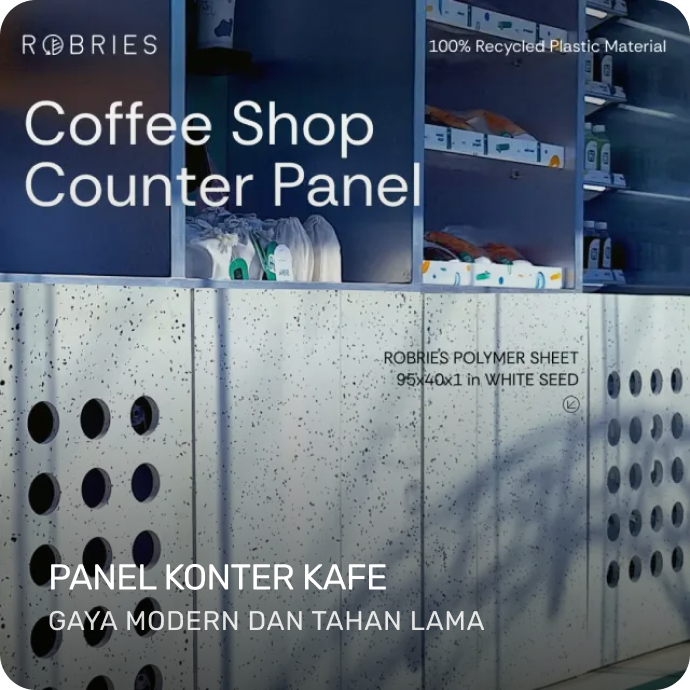

A New Trend in More Sustainable Café Design
The café industry continues to evolve, not only in terms of menu and customer experience but also in spatial design, which increasingly takes sustainability into account. In recent years, more and more cafés have begun switching to furniture made from recycled plastic as part of a more eco-friendly design strategy.
This choice of material is not merely a visual trend; it also reflects a shift in how businesses view their environmental impact. Many café owners now see that using sustainable furniture can strengthen brand identity, enhance a space’s appeal, and make a tangible contribution to reducing plastic waste.
In addition, modern consumers—especially the younger generation—increasingly value businesses committed to sustainability. As a result, the decision to use café furniture made from recycled plastic often becomes part of a broader branding strategy.
Why Recycled Plastic Furniture Is Well-Suited for Cafés
Recycled plastic has characteristics that make it highly suitable for use in commercial spaces such as cafés, particularly in high-traffic areas.
1. High Durability for Commercial Use
Cafés typically have fairly intensive furniture usage. Chairs and tables are used throughout the day by many customers, requiring strong and long-lasting materials. Furniture made from high-quality recycled plastic, such as recycled HDPE, is resistant to moisture, weather changes, light scratches, and long-term use. These characteristics make it a practical choice for both indoor and outdoor areas.
2. Weather-Resistant for Outdoor Areas
Many modern cafés rely on outdoor spaces such as terraces, rooftops, or gardens as part of the customer experience. In these areas, furniture must be able to withstand exposure to sunlight, rain, and temperature changes. Unlike wood, which requires regular maintenance, recycled plastic outdoor chairs tend to be more stable against environmental conditions, resulting in lower maintenance costs.
3. Easier Maintenance
In busy café operations, ease of maintenance is an important factor. The surface of recycled plastic furniture usually has a texture that does not easily absorb liquids and is fairly easy to clean. With simple care such as routine cleaning using a cloth or mild soapy water, the furniture can continue to look good for a long time.
The Branding Value of Sustainable Design
Beyond functional aspects, using eco-friendly furniture also adds value from a branding perspective. Many cafés today build identities related to sustainability, an eco-conscious lifestyle, and responsible consumption. By integrating recycled materials into interior and exterior design, cafés can convey the message that their business cares about the environment.
This often becomes a compelling storytelling element for customers. It is not uncommon for customers to share their experiences on social media when they discover a space with unique design and sustainability value.
The Aesthetics of Recycled Plastic Material
One interesting development in the furniture design industry is the emergence of various visual explorations using recycled plastic. Modern production processes allow this material to take on a fairly diverse appearance, ranging from natural marble patterns to unique color combinations and distinctive textures.
The result is furniture that is not only functional but also has a strong visual character. This is highly suitable for cafés that want to create a spatial identity different from competitors. Many designers are also beginning to leverage this material’s character to create more expressive design elements, such as tables with unique patterns or decorative panels made from recycled plastic.
Design Flexibility for Modern Café Concepts
Every café has a different design concept—from modern minimalist to industrial or natural contemporary. Recycled plastic offers considerable flexibility in the design process, allowing it to be used for various types of furniture such as chairs, tables, benches, decorative panels, and additional interior elements.
Furthermore, furniture made from recycled plastic can also be custom-produced to suit the space, dimensions, and visual concept of each café project. This approach allows business owners to create spaces that are more personal and aligned with their brand identity.
Contribution to Reducing Plastic Waste
One of the main reasons for the rising use of recycled materials is its contribution to reducing plastic waste. Every furniture product made from recycled plastic essentially reuses material that would otherwise have potentially become waste. With the right design approach, that waste can be transformed into products that have both economic and aesthetic value.
This concept also aligns with the circular economy approach, in which materials are reused within a more sustainable production cycle. For many businesses, participating in this approach becomes part of their commitment to more responsible business practices.
The Future of Sustainable Furniture for the F&B Industry
As awareness of environmental issues grows, the use of sustainable furniture is expected to expand further within the F&B industry. Café owners no longer consider only aesthetics and cost but are also beginning to see how spatial design can have a broader positive impact.
Materials such as recycled plastic offer businesses the opportunity to create spaces that are durable, have a unique design character, and support sustainability practices. With this combination of function and environmental value, furniture made from recycled plastic is becoming an increasingly relevant design solution for modern cafés.