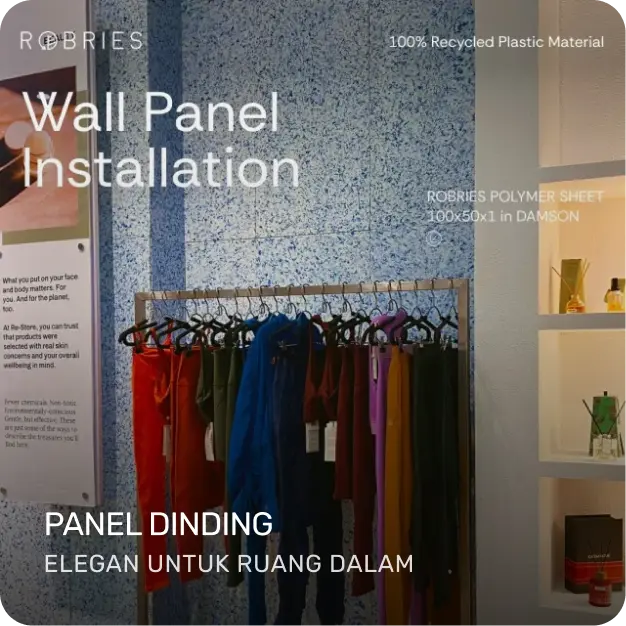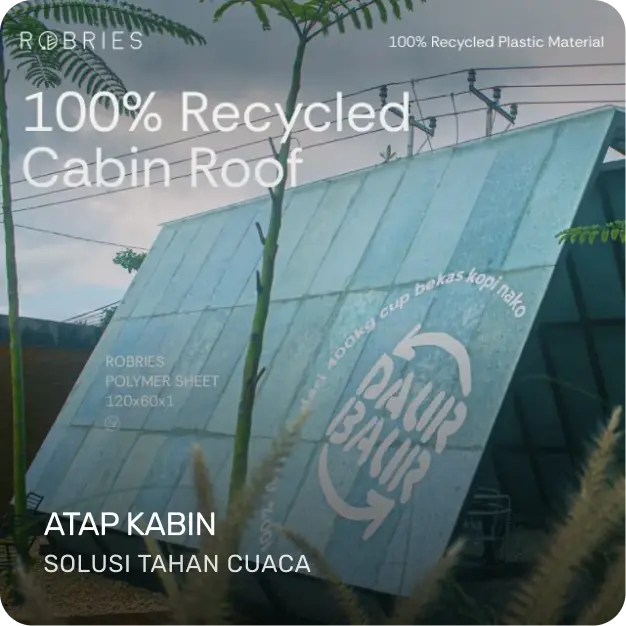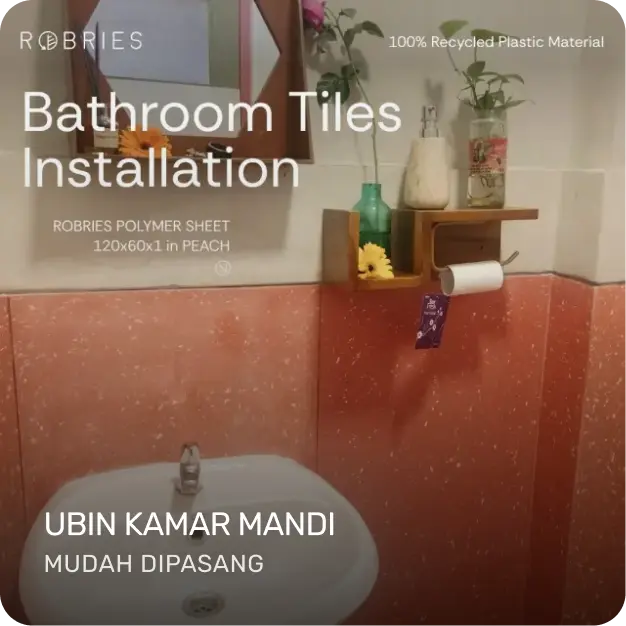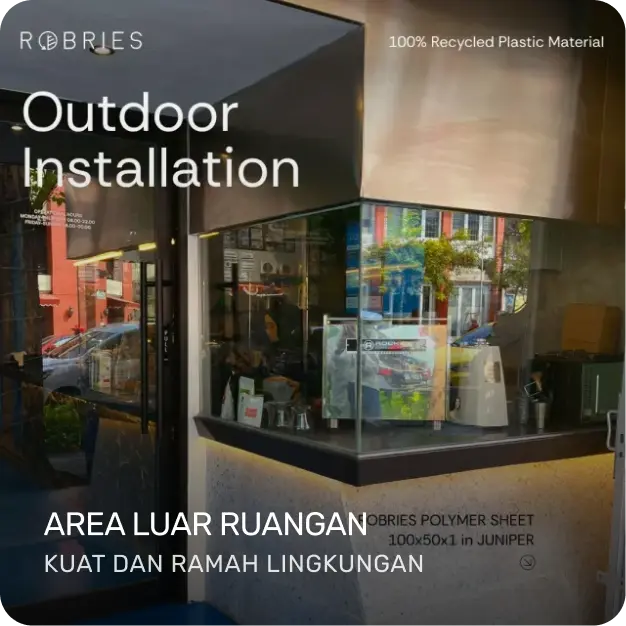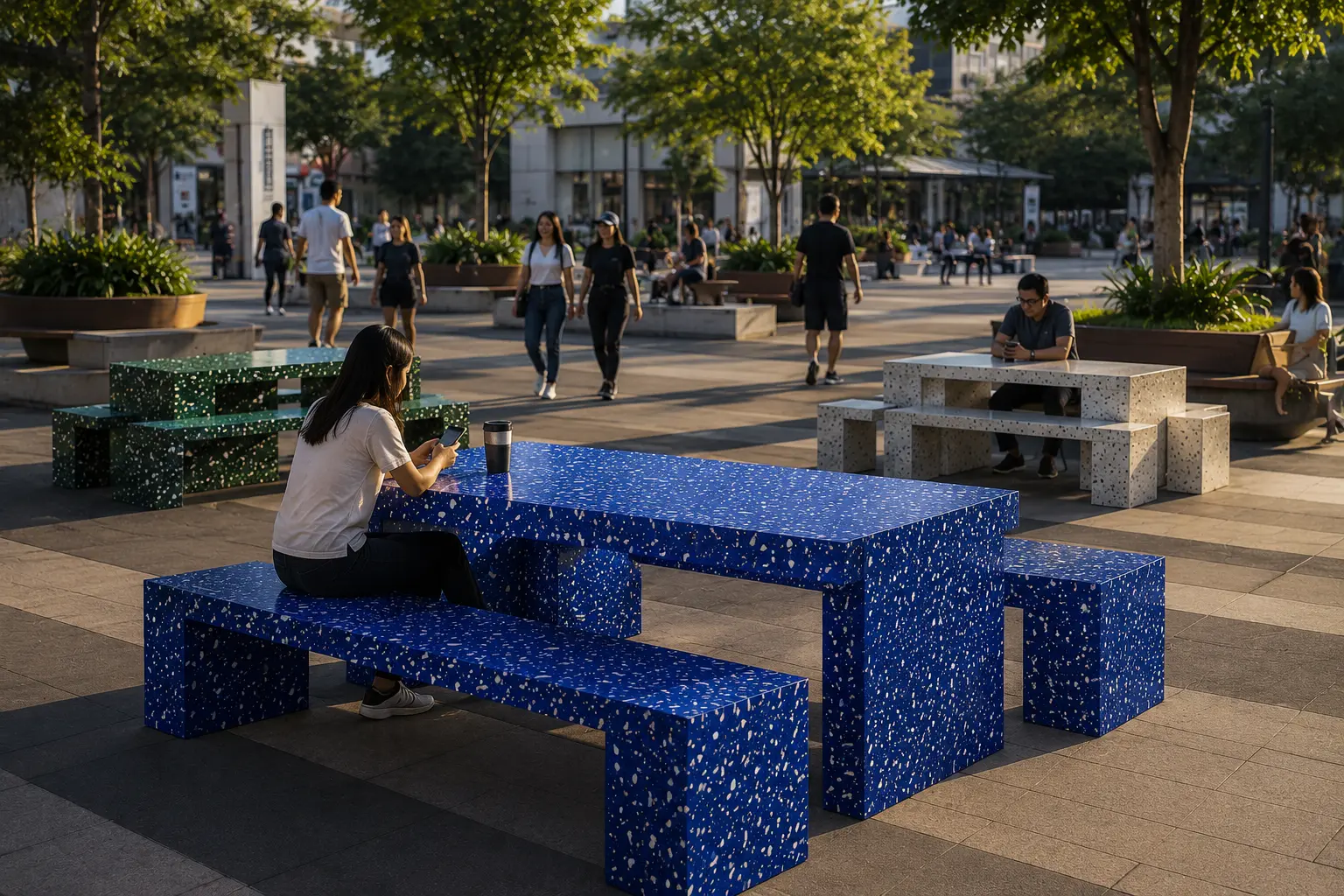

Public space furniture (recycled plastic, HDPE) meets four critical public-area criteria: outdoor weather resistance, durability for intensive use by hundreds of people daily, simple maintenance across large areas, and user safety. It supports the circular economy while creating a unique visual identity for parks, plazas, and pedestrian zones. Robries supplies spec-ready material for park benches, communal tables, and modular seating.
Public spaces that increasingly weigh sustainability
City parks, pedestrian zones, plazas, and communal spaces shape urban quality of life. Many cities and developers now use recycled plastic furniture as part of eco-friendly design — turning plastic waste into functional elements while signaling a commitment to responsible development.
Four demands placed on public-space material
Public-space furniture differs from private interiors: high usage and varied environmental exposure.
- Material must meet weather resistance,
- Durability for intensive use,
- Easy maintenance,
- User safety.
HDPE-based recycled plastic meets all four.
Surviving weather and hundreds of users
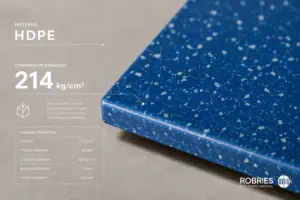
Most public spaces sit in open areas exposed to sun, rain, and temperature shifts. Recycled HDPE withstands these conditions and is strong enough for park benches and communal tables used by hundreds daily, resisting light impact and scratching.
A new aesthetic aligned with circularity
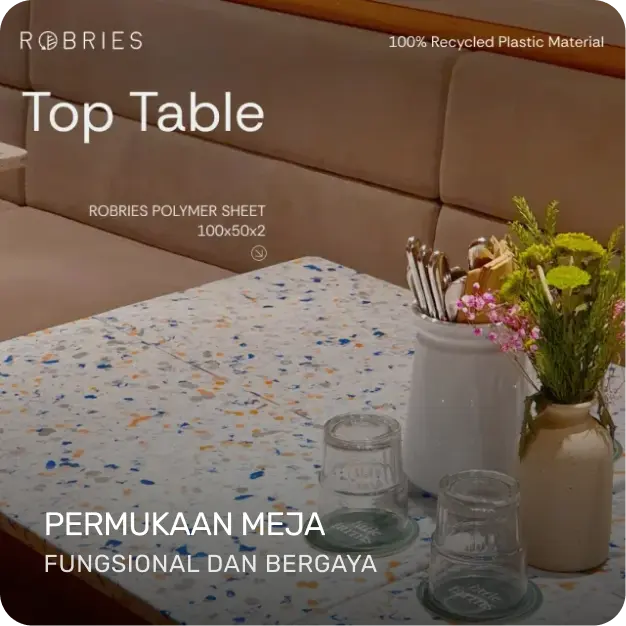
Unique color patterns from mixed plastics create opportunities for visual elements distinct from conventional materials — patterned benches, communal tables, modular seating. This aligns with the circular economy: plastic waste is reprocessed into long-life products, reducing demand for new material.
Safe for children, the elderly, and everyone
Public-space furniture serves all ages and abilities, making safety a non-negotiable criterion. Recycled plastic material can be formed with rounded corners, non-slip surfaces when wet, and no splinters that risk injury — unlike wood, which can crack or splinter over time. Bench design with heights and depths meeting public ergonomic standards is also important for comfort for the elderly and children.
How it withstands vandalism
One of the biggest operational burdens for public-space managers is vandalism. The dense, non-porous surface of recycled plastic is relatively easier to clean of graffiti than porous wood. The material is also not easily carved or damaged, and light scratches are less visible on patterned surfaces than on plain ones. For tight city budgets, this durability translates directly into maintenance savings.
Start with a pilot, then scale city-wide
Many city governments start with a small pilot project — one park or one plaza — to measure durability and public response before scaling. This approach reduces budget risk and provides real data. Recycled material suits this model because it can be ordered in phased volumes, and specification documentation makes replicating the spec easy in later phases.
Notes for city managers
As a practical summary: Public-space furniture from recycled plastic meets the criteria of weather resistance, intensive durability, safety, and low maintenance—while supporting the city’s circular economy. To validate whether the material fits your project needs, the most effective step is to assess it directly — Robries provides a free physical sample plus a technical spec sheet delivered to your studio or project site within 3 working days, with no purchase obligation. With a sample in hand, design and procurement teams can evaluate color, texture, weight, and dimensional fit before making a budget decision. An early discussion of volume, dimensions, and timeline also helps the material team prepare an accurate estimate and maintain consistency across orders.
Each public-space type, different needs
Public spaces span varied types with different demands. City parks need weather- and vandalism-resistant benches for all-day use. Transit areas (stops, stations) need material easy to clean of graffiti and built for high traffic. Plazas and communal spaces need reconfigurable modular seating. Pedestrian areas need safe furniture—rounded corners, non-slip when wet, no splinters. HDPE-based RPS meets these demands at once, with an added advantage: it can be ordered in phased volumes for a pilot approach before scaling city-wide.
Reading the cost for a city budget
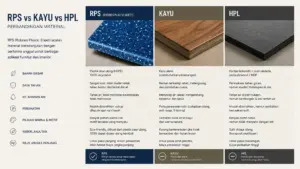
For city managers, long-term maintenance cost often matters more than purchase price. Wooden benches need repainting and are rot-prone; metal can rust and needs anti-corrosion care; concrete is heavy and hard to replace. RPS’s dense, non-porous surface is relatively easier to clean of graffiti, does not rot, and resists termites—lowering annual maintenance costs. Because the material can be recycled again at end of life, the city can also close the material loop instead of landfilling, aligning with urban sustainability targets.
Realizing a public space with Robries
For city governments and developers, Robries provides recycled material for park benches, communal tables, and public seating elements. Material can be ordered in phased volumes — suited to a pilot approach before scaling city wide. Specification documentation makes replicating the spec across phases easy. Contact our team to discuss your public-space project needs.
FAQ
Very durable. Recycled HDPE is strong for intensive use by hundreds of people daily and resists light impact and everyday scratching.
Yes. The surface does not absorb liquids and cleans easily with simple methods — ideal for large areas on an efficient maintenance budget.
It turns plastic waste into long-life furniture, supporting the circular economy and reducing the need to produce new material.
Yes. The material can be formed with rounded corners and non-splintering surfaces, safer than wood that can crack. Ergonomic design meeting public standards is recommended for comfort across all ages.
The dense, non-porous surface is relatively easier to clean of graffiti than porous wood, and light scratches are less visible on patterned surfaces — lowering city maintenance costs.