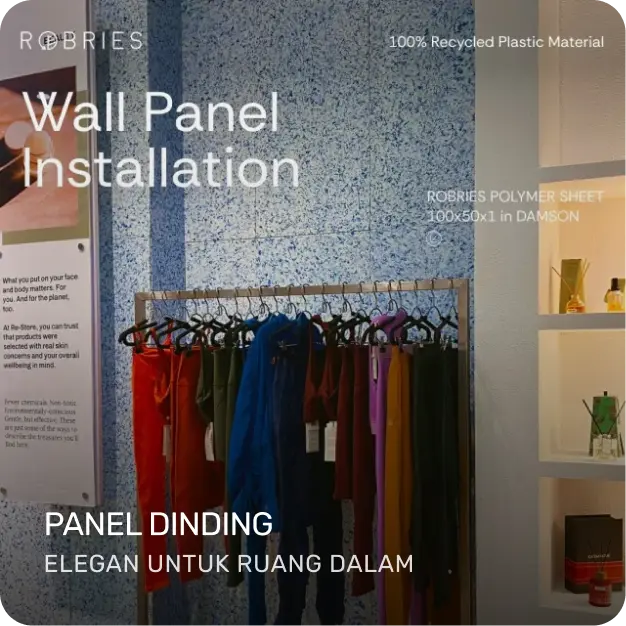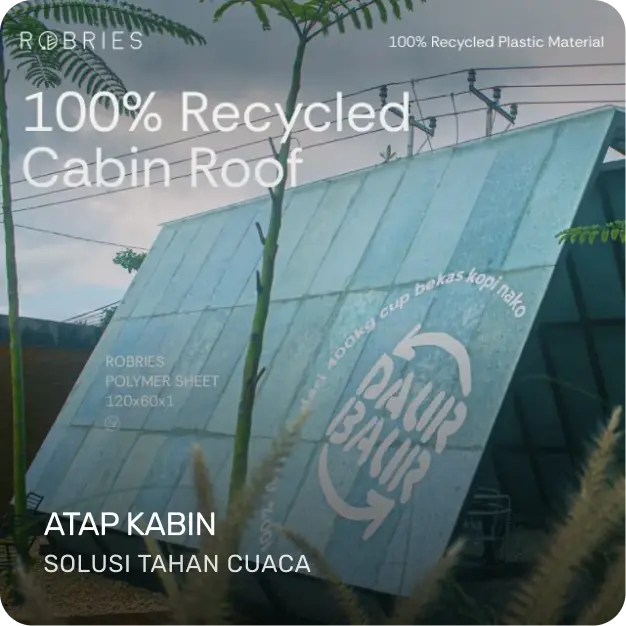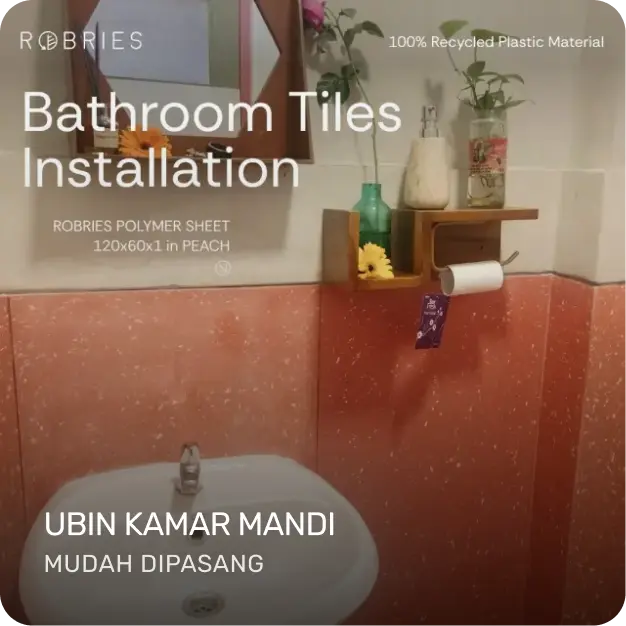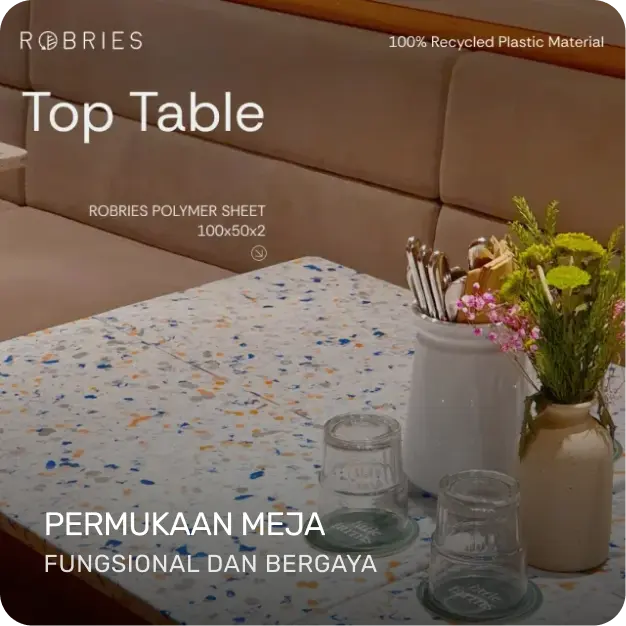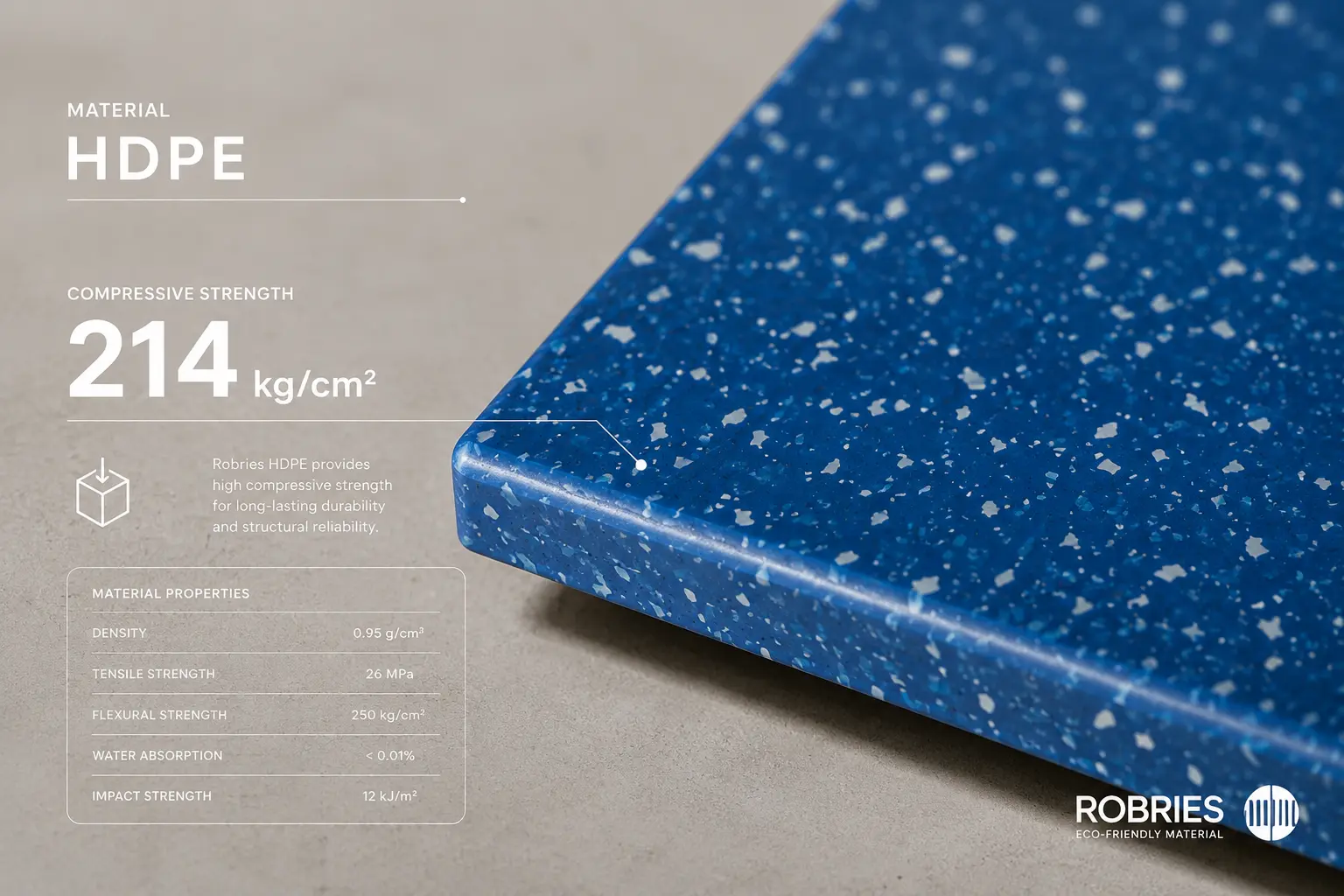

Recycled HDPE plastic is material from waste such as bottle caps, crates, and shampoo bottles, processed into solid sheets. Its key advantage: high impact strength up to 214 kg/cm2 (vs LDPE 93 kg/cm2), resistant to moisture, weather, and termites. It suits indoor and outdoor commercial furniture and interiors. Robries produces recycled HDPE and LDPE sheets in three standard sizes with complete specification documentation.
What recycled HDPE plastic is
HDPE (High-Density Polyethylene) is a high-density plastic widely used for bottle caps, crates, and shampoo bottles. When recycled, it is processed into solid sheets usable for furniture and interior elements — turning everyday waste into valuable design material.
How strong: HDPE vs LDPE
Recycled HDPE’s key advantage is high impact strength — up to 214 kg/cm2. By comparison, LDPE (Low-Density Polyethylene, from flexible plastics and gallon caps) has an impact strength of about 93 kg/cm2. This difference makes HDPE better suited to applications needing high durability, such as commercial furniture and outdoor areas.
Resistant to moisture, weather, and termites
Beyond strength, recycled HDPE resists moisture, weather change, and termites. This character makes it consistent for indoor and outdoor use — unlike wood, which needs routine upkeep and is vulnerable to termites and moisture.
How it is processed and used
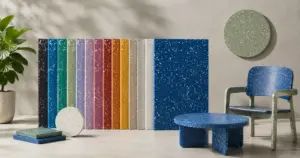
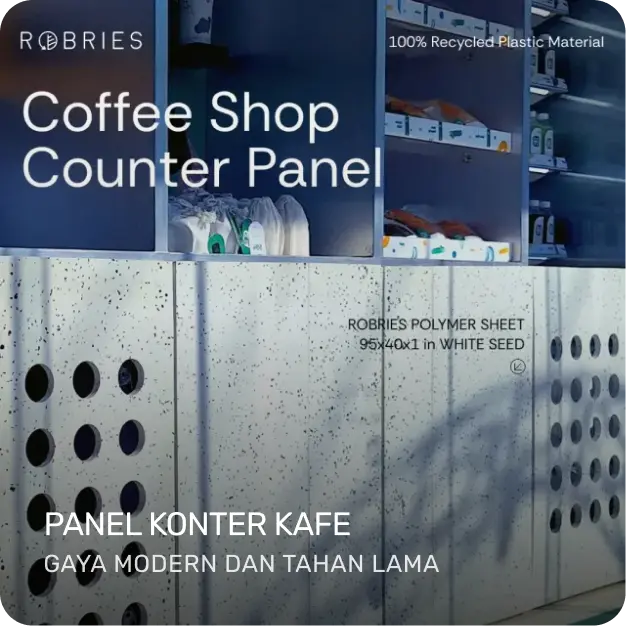
Recycled HDPE can be processed with common tools (circular saw, router, drill) into tables, chairs, panels, and custom elements. Robries produces sheets in three standard sizes — 95×40, 100×50, and 120×60 cm — with 1-2 cm thickness options and complete spec documentation for architects’ spec drawings.
Recognizing resin codes and plastic types
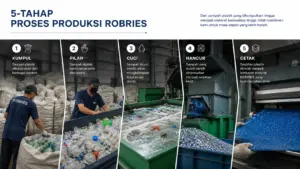
Plastics have a resin identification code (1-7) marking their type. HDPE is marked code 2, one of the easiest and most valuable types to recycle, often found on bottle caps, crates, and shampoo bottles. Understanding this code helps explain why recycled HDPE is consistent in quality: its feedstock is relatively uniform. Conversely, unsorted mixed plastics yield less consistent material — the reason sorting is a crucial stage in production.
Why HDPE wins for structural loads
HDPE’s high density gives it a good strength-to-weight ratio and superior dimensional stability compared with low-density plastics. This is why its impact strength reaches 214 kg/cm2. For load-bearing or intensive-use applications — tabletops, benches, structural panels — this character matters. The more flexible LDPE (approx 93 kg/cm2) suits applications needing a little flex.
Environmental edge across the life cycle
Beyond strength, recycled HDPE carries environmental advantages across its life cycle. Reusing waste HDPE reduces the need for fossil-based virgin plastic, and at end of life the product can still be recycled again because HDPE is a thermoplastic that can be remelted. This character makes it a choice consistent with circular economy principles, not merely a single-use solution.
Before choosing HDPE: the gist
As a practical summary: Recycled HDPE plastic (resin code 2) offers impact strength up to 214 kg/cm2, well above LDPE, and can be recycled again as a thermoplastic. To validate whether the material fits your project needs, the most effective step is to assess it directly — Robries provides a free physical sample plus a technical spec sheet delivered to your studio or project site within 3 working days, with no purchase obligation. With a sample in hand, design and procurement teams can evaluate color, texture, weight, and dimensional fit before making a budget decision. An early discussion of volume, dimensions, and timeline also helps the material team prepare an accurate estimate and maintain consistency across orders.
HDPE properties: from resin code to strength
HDPE (High-Density Polyethylene) is marked resin code 2—one of the easiest and most valuable plastics to recycle, common in bottle caps, crates, and shampoo bottles. Its high density gives a good strength-to-weight ratio and superior dimensional stability, the reason its impact strength reaches 214 kg/cm2. By comparison, LDPE (code 4, from flexible plastics and gallon caps) has an impact strength of about 93 kg/cm2—more flexible, suited to applications needing a little flex. Beyond strength, recycled HDPE resists moisture, weather, and termites, making it consistent for indoor and outdoor use—unlike vulnerable wood.
Processing and the recyclable-again advantage
Recycled HDPE can be processed with common tools—circular saw, router, drill—into tables, chairs, panels, and custom elements; avoid laser cutting because excess heat melts the material. Robries produces sheets in three standard sizes (95×40, 100×50, 120×60 cm) with 1-2 cm thickness and complete spec documentation for architects’ spec drawings. HDPE’s unique advantage is its full life cycle: as a thermoplastic, it can be remelted and remolded, so at end of life the product can still be recycled again—consistent with circular economy principles, not a single-use solution.
Recycled HDPE material from Robries
Robries produces sheets from recycled HDPE and LDPE with complete technical specification documentation — impact strength, sizes, thickness, and material source. For architects needing spec-drawing data, our material comes with the technical information required. Available in three standard sizes with 1-2 cm thickness options. Request a spec sheet and sample for your project.
HDPE (from bottle caps, crates) has impact strength up to 214 kg/cm2, stronger than LDPE (from flexible plastics, gallon caps) at about 93 kg/cm2. HDPE is better for high-durability applications.
Its impact strength reaches 214 kg/cm2, resisting moisture, weather, and termites — suitable for indoor and outdoor commercial furniture.
Common tools: circular saw, grinder, router, jigsaw for cutting; drill and nail gun for joining. Avoid laser cutting because excess heat melts the material.
HDPE is marked resin code 2, one of the easiest and most valuable plastic types to recycle, commonly found on bottle caps, crates, and shampoo bottles.
Yes. HDPE is a thermoplastic that can be remelted and remolded, so at end of life the product can return to the recycling cycle — consistent with circular economy principles.