
ANSWER FIRST
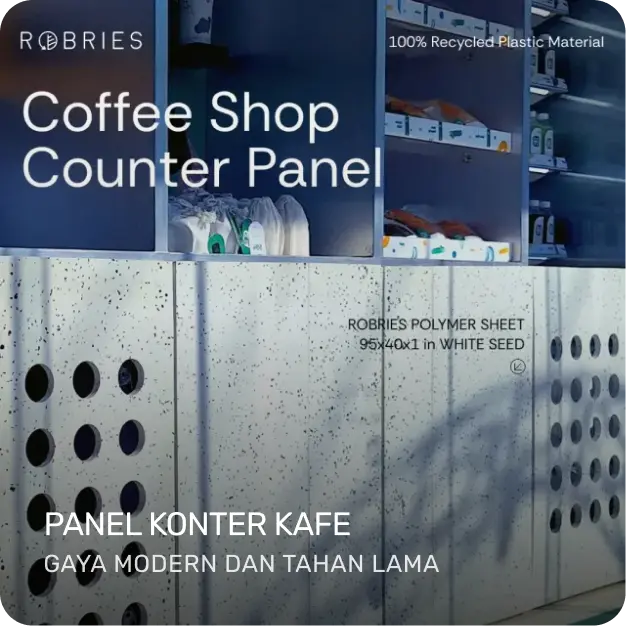
Eco-friendly hotel furniture from recycled plastic (HDPE) answers three hospitality needs at once: durability for high-traffic commercial areas, outdoor performance (poolside, rooftop), and efficient maintenance that lowers operating costs. It also supports ESG initiatives and serves as brand storytelling. Robries supplies spec-ready recycled sheets for hotel lobbies, restaurants, lounges, and outdoor areas.
Why sustainability became a hospitality priority
Hotels now integrate sustainability into interior material choices. Rising guest expectations push hotels to consider eco-friendly furniture as part of a responsible design strategy — while reinforcing a brand identity that is modern and globally relevant.
Furniture’s role in the guest experience
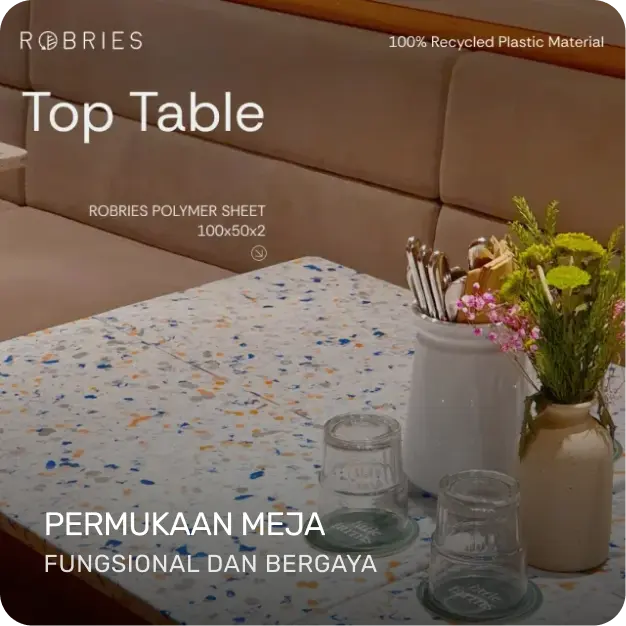
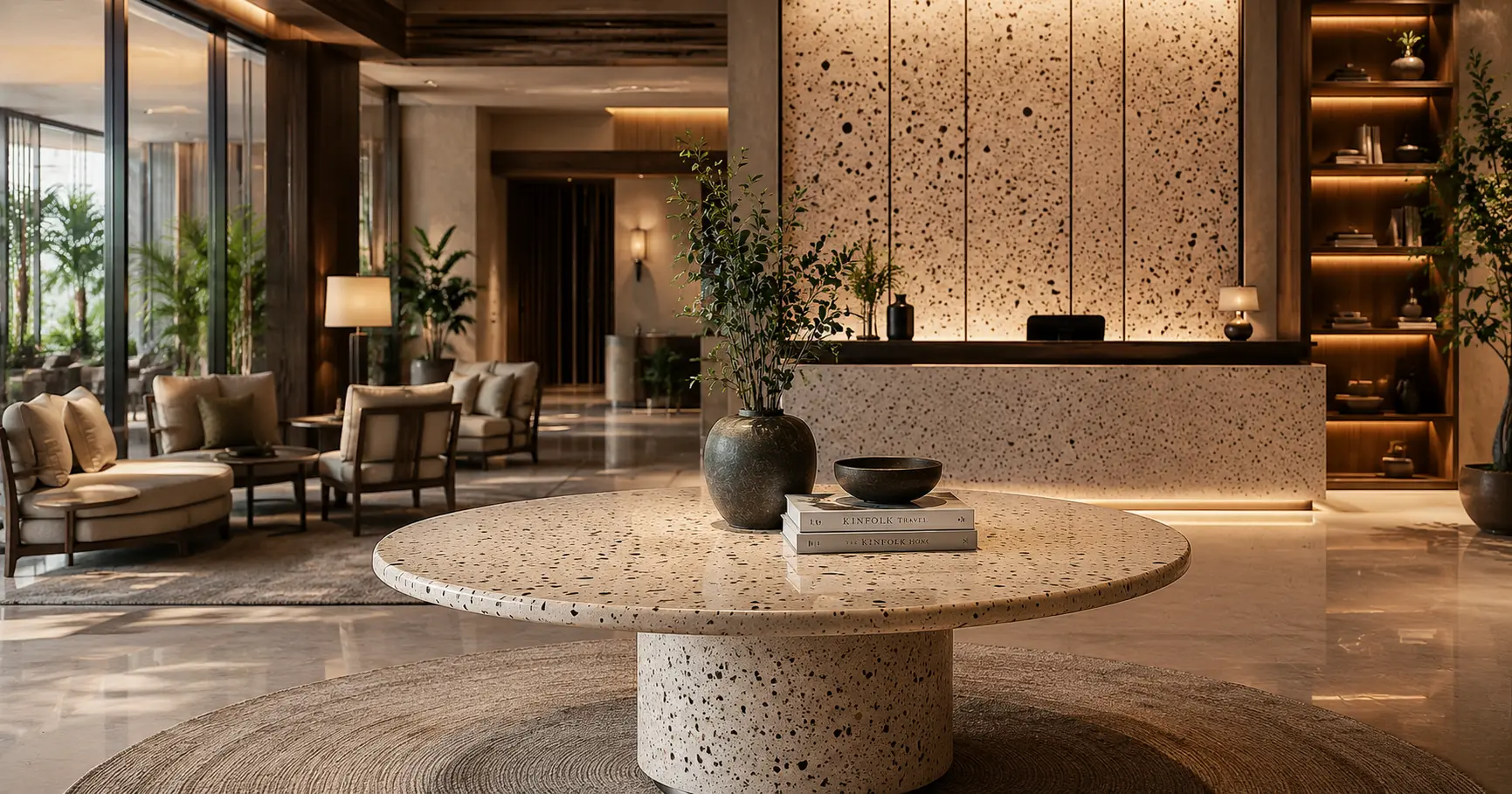
Across lobbies, hotel restaurants, lounges, rooftop bars, and outdoor areas, furniture contributes directly to comfort and aesthetics. Sustainable materials with unique visual character can become part of a space’s storytelling.
Three advantages for hotel operations
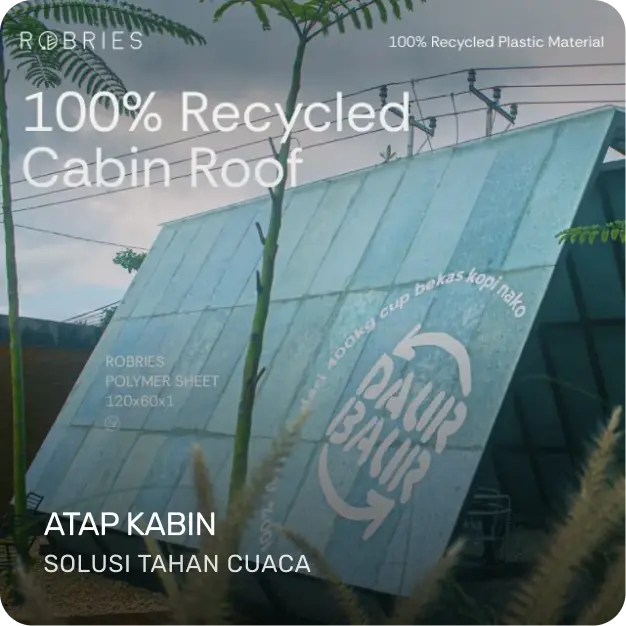
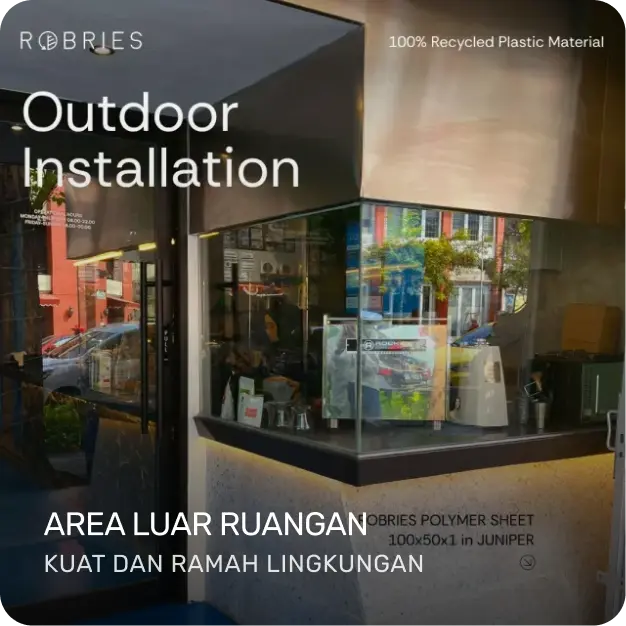
First, high durability for commercial areas: recycled HDPE withstands intensive use, moisture, and temperature change. Second, suitability for outdoor areas such as poolside lounges, rooftop bars, and terrace restaurants needing long-term weather resistance. Third, efficient maintenance — the surface does not absorb liquids, lowering overall upkeep costs.
Supporting ESG and branding strategy
Recycled plastic furniture helps hotels reuse plastic waste, aligning with Environmental, Social, and Governance initiatives. Hotels can elevate the story of sustainable materials as part of the brand experience — a factor that improves perception among environmentally conscious guests.
Procurement standards and documentation for hotel projects
Large hospitality projects generally involve formal procurement with strict material documentation. Recycled plastic furniture accompanied by a technical spec sheet — impact strength, dimensions, thickness, and material source — makes it easier for procurement teams and quantity surveyors to include it in the BoQ (Bill of Quantities). Green building documentation also helps sustainability consultants calculate the material’s contribution to certifications such as Greenship or equivalent standards.
Batch consistency for multi-phase projects
Hotels are often built or renovated in phases. A common challenge with natural materials is batch-to-batch variation. Recycled plastic material does have a unique pattern per sheet — part of its appeal — but the base color tone can be kept relatively consistent across orders if planned from the start. Discussing total volume needs upfront helps maintain visual coherence across project phases.
Communicating sustainability value to guests
Many hotels miss the opportunity by not communicating their sustainability initiatives. Recycled-material furniture can be accompanied by small signage, table cards, or a section in the room compendium explaining the material’s origin. For corporate and MICE guests whose companies have ESG commitments, this detail can be a differentiator when choosing a venue.
Key takeaways to remember
As a practical summary: Recycled material for hotels answers the need for commercial and outdoor durability, maintenance efficiency, and supports ESG reporting with clear documentation. To validate whether the material fits your project needs, the most effective step is to assess it directly — Robries provides a free physical sample plus a technical spec sheet delivered to your studio or project site within 3 working days, with no purchase obligation. With a sample in hand, design and procurement teams can evaluate color, texture, weight, and dimensional fit before making a budget decision. An early discussion of volume, dimensions, and timeline also helps the material team prepare an accurate estimate and maintain consistency across orders.
Robries for hospitality projects
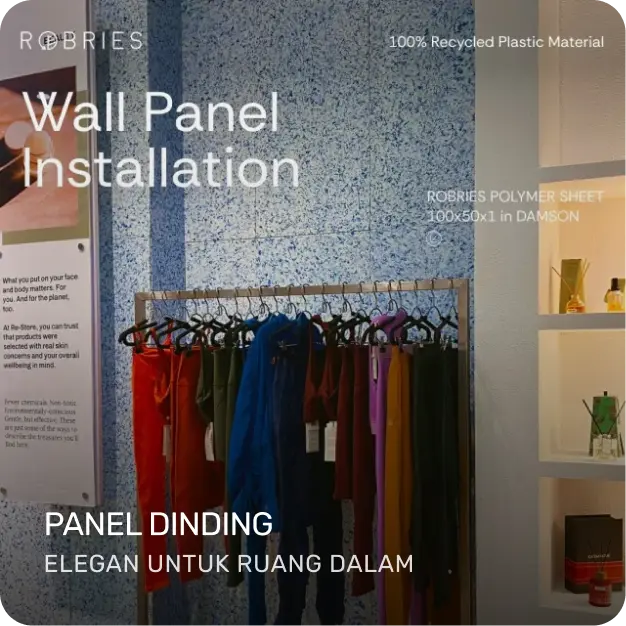
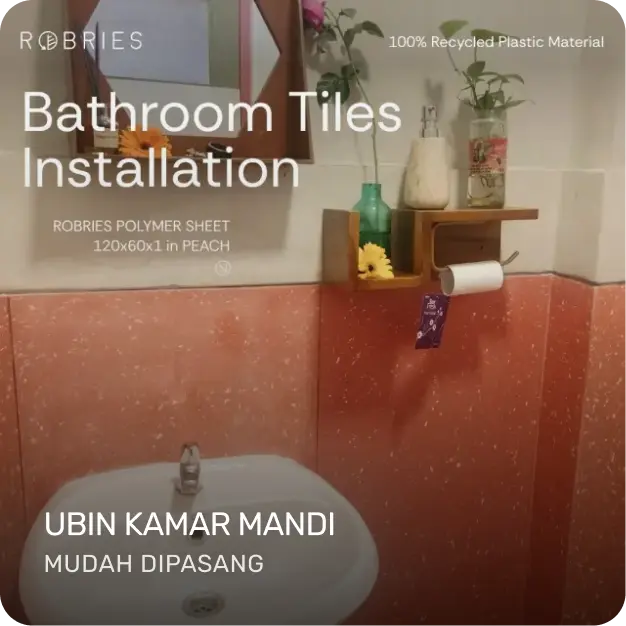
Robries provides spec-ready recycled material for hotel projects — from lounge tables to decorative panels and outdoor-area furniture. With technical and green building documentation that can support ESG reporting, the material suits formal procurement processes. Our material team can help prepare an estimate and samples for your hospitality project’s needs.
FAQ
Yes. HDPE-based material resists sun exposure and moisture, making it suitable for poolside lounges, rooftop bars, and terraces with long-term durability.
It reuses plastic waste into valuable products, supporting the Environmental pillar of ESG reporting while providing a sustainability narrative for guests.
Yes. Sheets can be produced custom in size, shape, and color for restaurant chairs, lounge tables, and statement interior elements.
The 100% recycled material comes with documentation that can help consultants calculate its contribution to sustainablematerial credits. Specific verification against a particular certification standard should be confirmed with the project’s sustainability consultant.
Base tone can be kept relatively consistent across orders when total volume is planned early. Because it is made from recycled plastic, pattern variation between sheets is a natural material characteristic.