
ANSWER FIRST
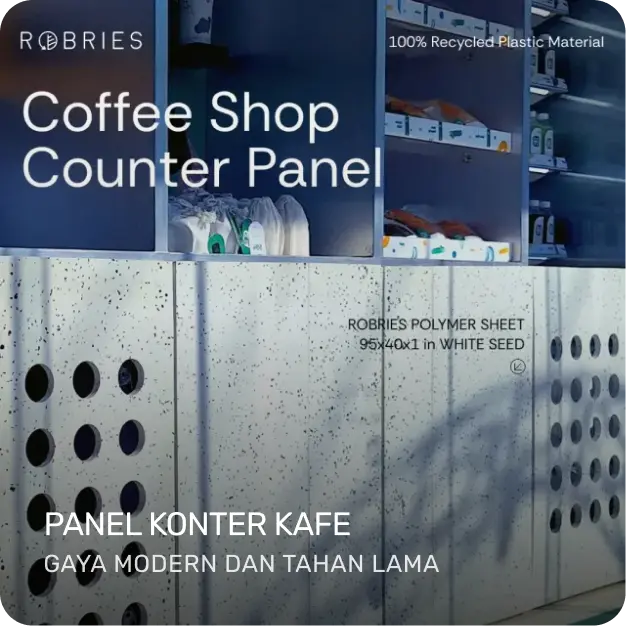
Recycled plastic cafe furniture (especially recycled HDPE with impact strength up to 214 kg/cm2) suits high-traffic areas because it resists moisture, weather, and termites with minimal maintenance. Beyond function, it strengthens the sustainable brand positioning younger consumers value. Robries makes spec-ready recycled sheets in 15+ colors for cafe tables, chairs, and decorative panels.
Why cafes are switching to sustainable furniture
Cafes no longer compete on menu alone but on space design that accounts for sustainability. More cafes are switching to recycled plastic furniture as part of an eco-friendly design strategy. This is not merely a visual trend: younger consumers value businesses committed to the environment, so the material decision becomes part of a broader branding strategy.
Three technical reasons this material fits cafes
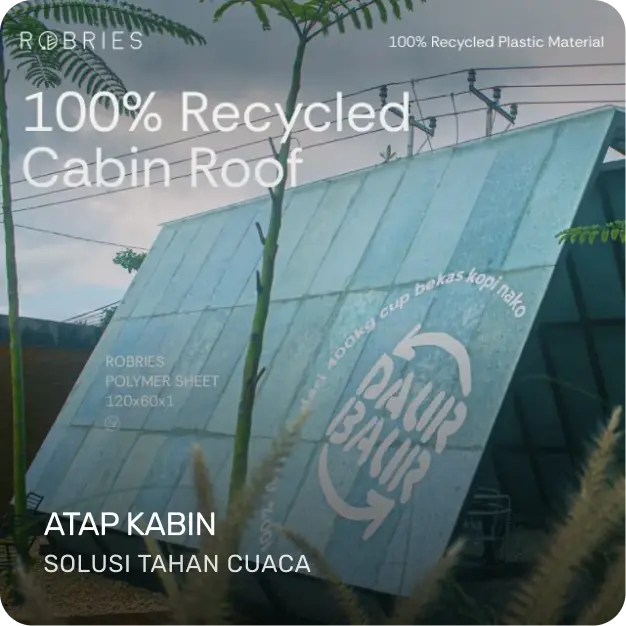
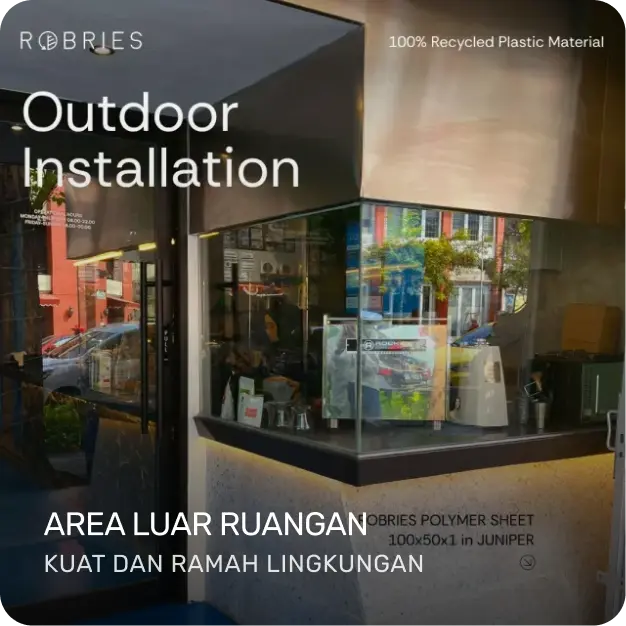
First, high durability for intensive commercial use — recycled HDPE has impact strength up to 214 kg/cm2 and resists moisture, weather changes, and light scratching. Second, weather resistance for outdoor areas like terraces and rooftops without the routine upkeep wood needs. Third, easy maintenance: the surface does not absorb liquids and wipes clean with a cloth or mild soapy water.
The branding value of sustainable design
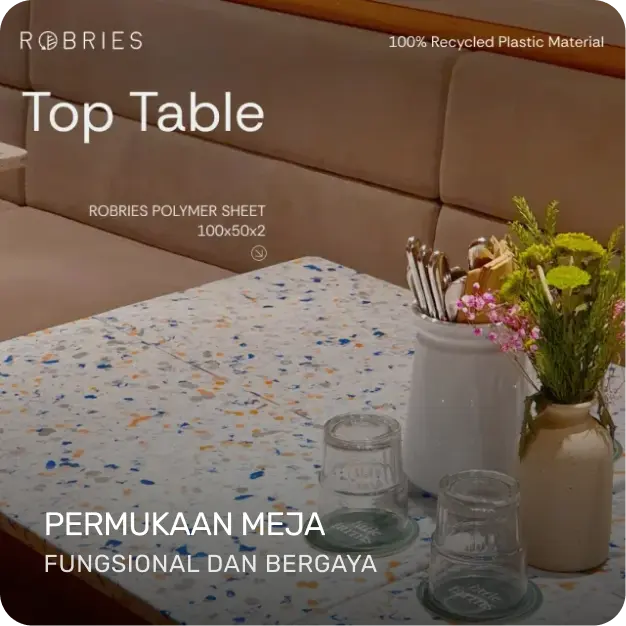
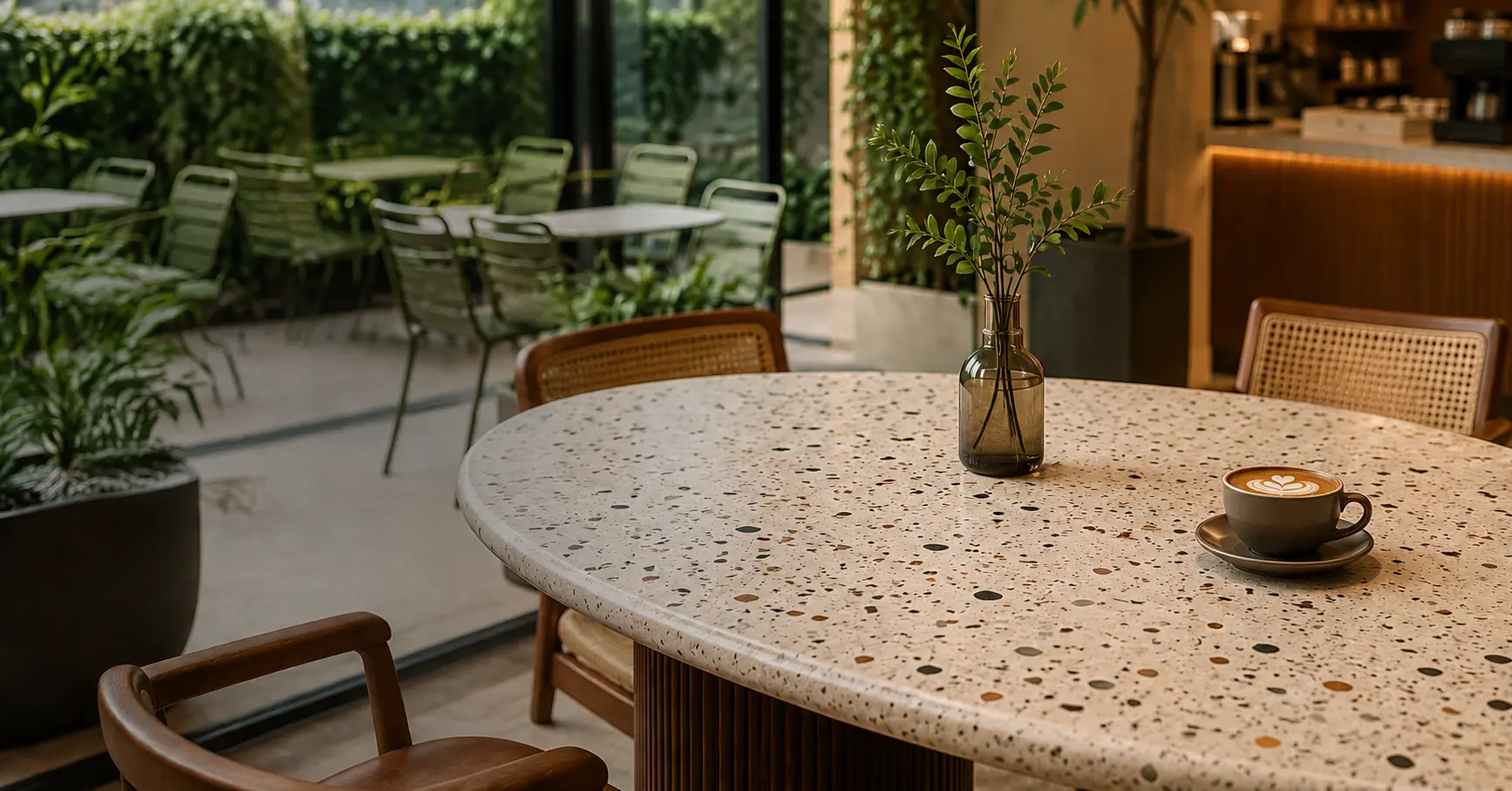
Many cafes build an identity around sustainability and an eco-conscious lifestyle. Integrating recycled material signals that a business cares about the environment — often a storytelling element customers share on social media. The material’s aesthetics support that story: marbled, terrazzo-like patterns and unique color blends give a visual character distinct from competitors.
Flexibility for different concepts
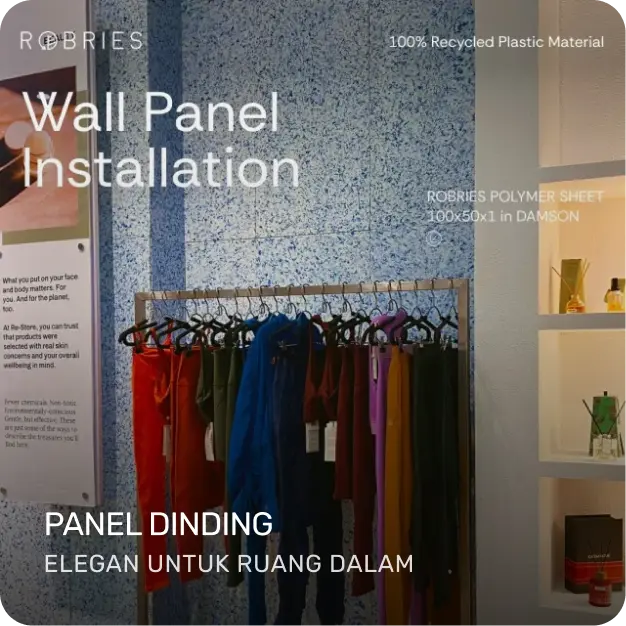
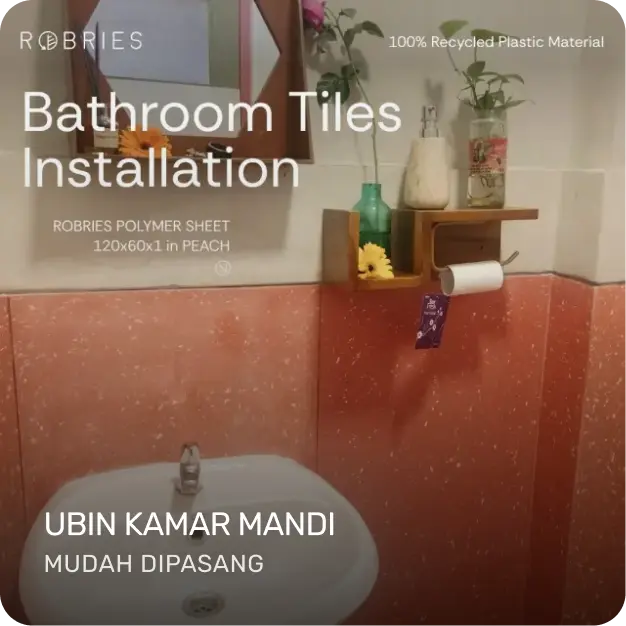
From modern minimalist to industrial, recycled plastic sheets can be cut, drilled, and bent into chairs, tables, benches, decorative panels, and custom elements. Robries produces spec-ready sheets adaptable in dimension and color per project.
Comparing long-term cost vs conventional materials
Many cafe owners initially judge furniture by purchase price alone. A more accurate calculation is total cost of ownership over 5-7 years. Cheap wooden chairs may need recoating every year, swell in humidity, and fall prey to termites — maintenance and replacement costs add up. Recycled HDPE furniture removes most of these: no
≈860 kata recoating, termite resistance, and moisture stability. For a cafe operating 12-16 hours a day, this difference becomes operationally significant.
Acoustic and comfort considerations
Beyond durability, surface and furniture materials affect cafe acoustics. The dense surface of recycled plastic sheets can be paired with soft elements (cushioned seats, acoustic panels) to balance noise at peak hours. Tables with a solid surface are also more stable for laptops and equipment, supporting cafes serving remote workers — a growing segment that stays longer.
How to start: from sample to specification
A practical path for cafe owners or designers: begin by ordering a physical sample to assess texture, color, and weight directly. After choosing a color from 15+ options, set table and chair dimensions to suit the layout. Robries provides a technical spec sheet to help contractors cut and install with common tools. A free physical sample ships to the studio or cafe within 3 working days, with no purchase obligation.
Key takeaways to remember
As a practical summary: Recycled HDPE cafe furniture combines commercial durability (impact strength up to 214 kg/cm2), minimal maintenance, and sustainable branding value that younger consumers appreciate. To validate whether the material fits your project needs, the most effective step is to assess it directly — Robries provides a free physical sample plus a technical spec sheet delivered to your studio or project site within 3 working days, with no purchase obligation. With a sample in hand, design and procurement teams can evaluate color, texture, weight, and dimensional fit before making a budget decision. An early discussion of volume, dimensions, and timeline also helps the material team prepare an accurate estimate and maintain consistency across orders.
Robries for your cafe project
As an Indonesia-based material studio, Robries produces Robries Polymer Sheet (RPS) from 100% recycled plastic that can be formed into cafe tables, chairs, and panels to match your space concept. Available in 15+ colors with a unique pattern on every sheet, plus technical support for cutting and installation. If you are designing or renovating a cafe, a free physical sample can help you assess the material before deciding.
FAQ
Yes. Recycled HDPE has impact strength up to 214 kg/cm2, engineered for intensive commercial use and resistant to light scratches and everyday impact.
Yes. The material withstands sun, rain, and temperature changes, making it suitable for terraces, rooftops, and gardens without wood-level upkeep.
15+ colors are available, and custom colors are possible at certain volumes. Each sheet is unique because it is made from 100% recycled plastic.
Purchase price varies, but long-term total cost of ownership is often lower because there is no recoating, it resists termites, and replacement is minimal — important for cafes with long operating hours.
Like other solid materials, the surface can warm under direct sun. Choosing lighter colors and placing it in shaded areas helps in part. For full-sun outdoor areas, discuss color options with the material team.