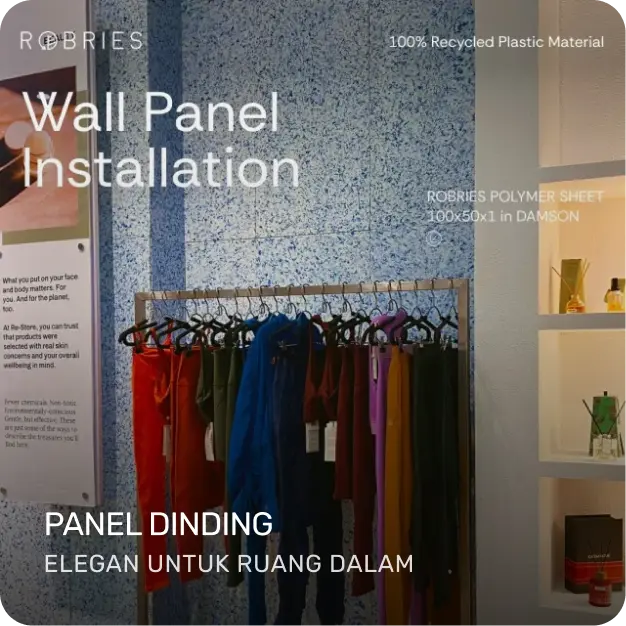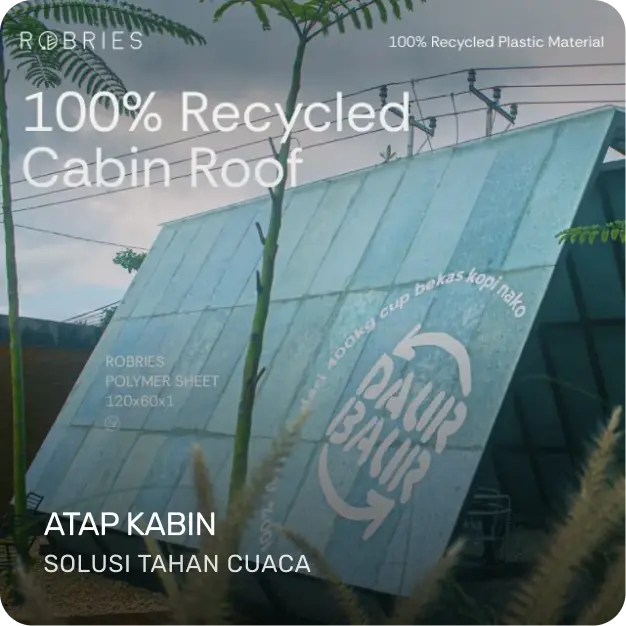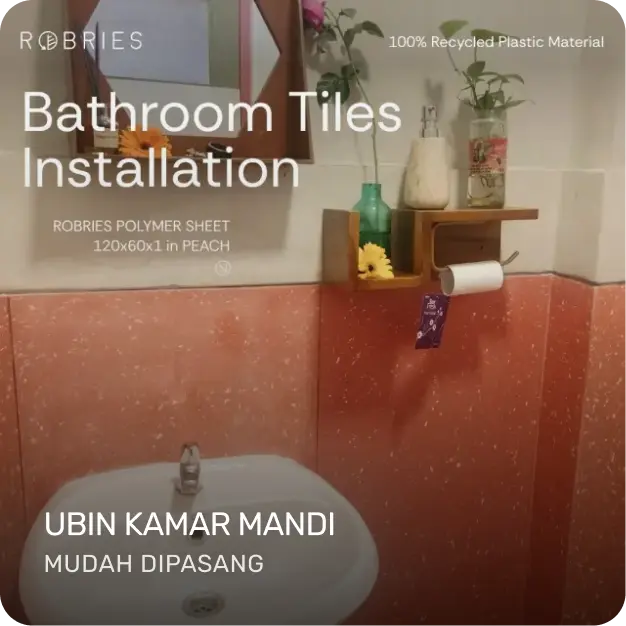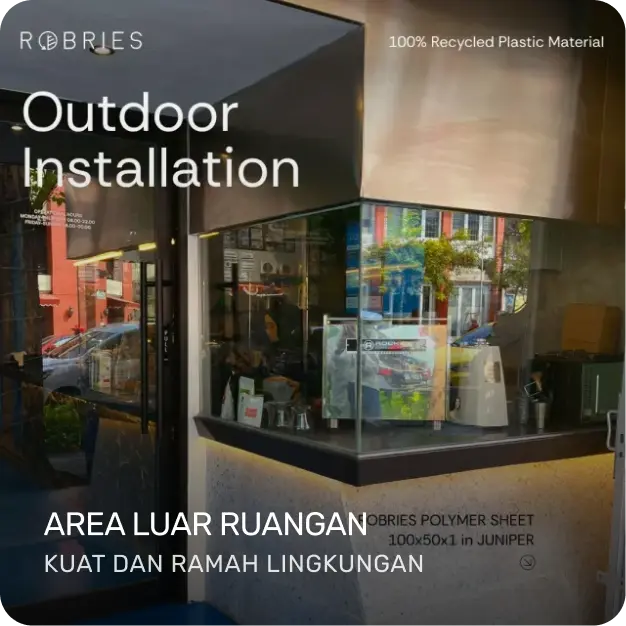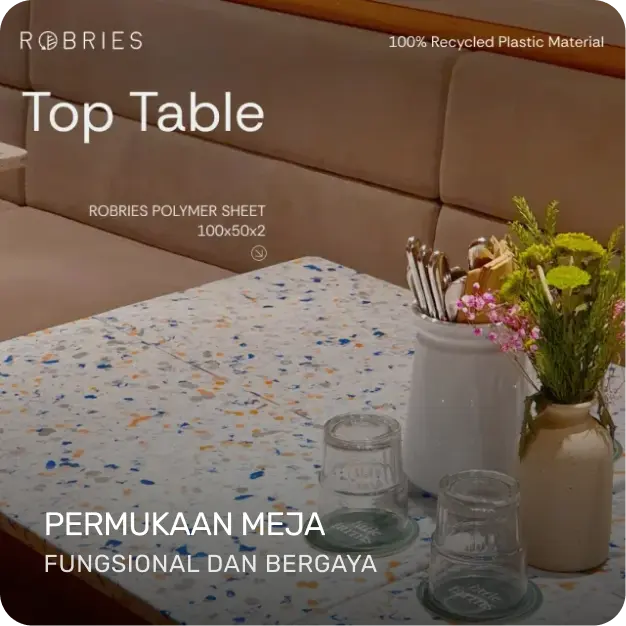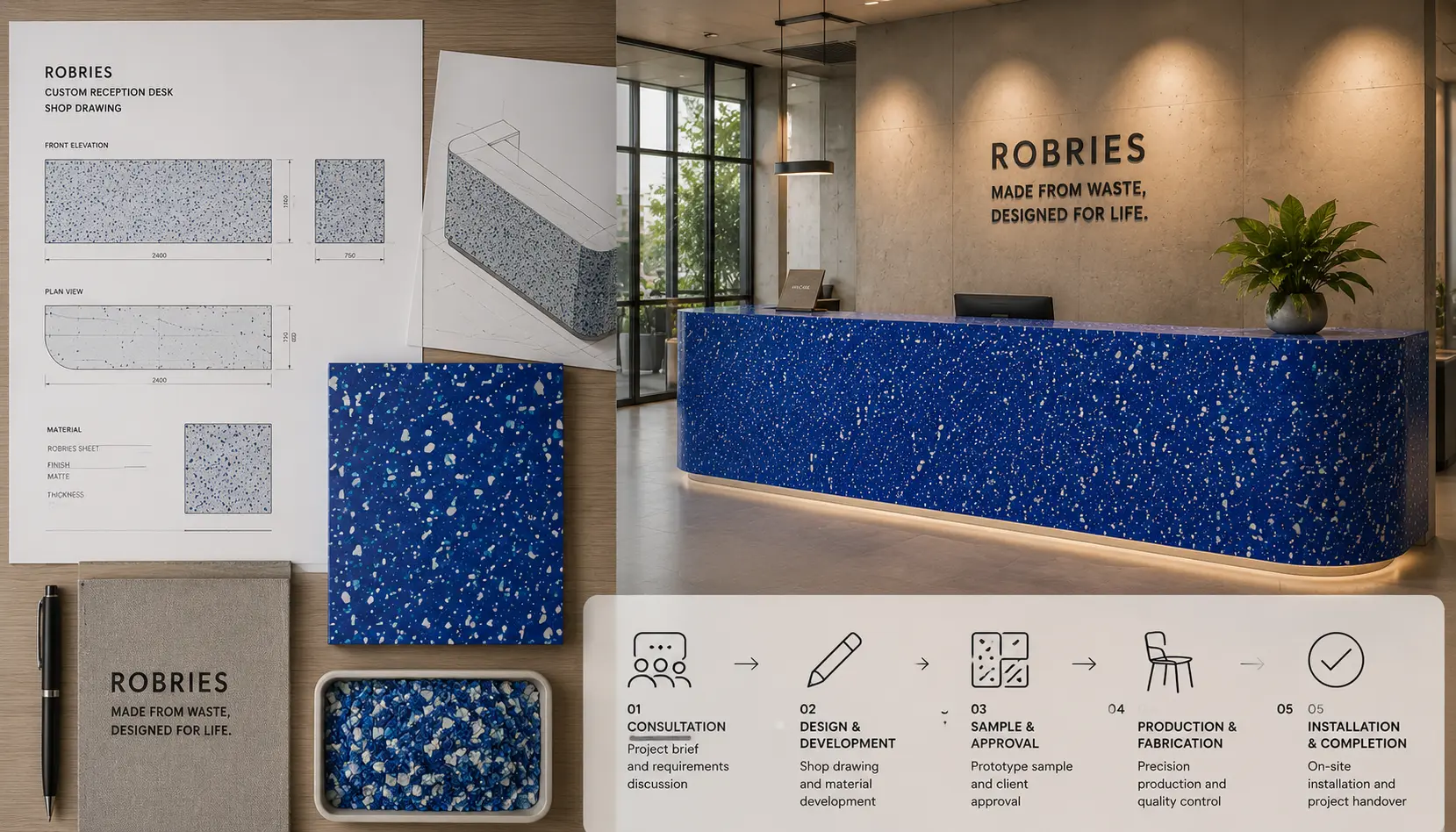

A custom recycled furniture service combines a designer's creative vision with production expertise to create furniture matched to commercial project needs — hotels, cafes, offices, public spaces. The collaborative process defines dimensions, form, color, and integration with the interior, while maintaining durability for commercial use. Robries supplies spec-ready sheets and supports custom cutting with a typical lead time of 2-4 weeks.
Why collaboration matters in furniture design
The furniture industry grows with demands for quality, innovation, and sustainability. Product success often depends on designer-producer collaboration — especially for recycled plastic furniture, where design exploration must run alongside production capability and material innovation.
When creativity meets production expertise
Designers explore visual concepts, form, and user experience; producers understand production, material character, and manufacturing techniques. Working together, both consider form and structure, material efficiency, and long-term durability simultaneously.
Custom furniture for commercial projects
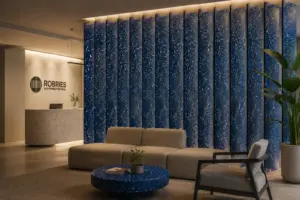
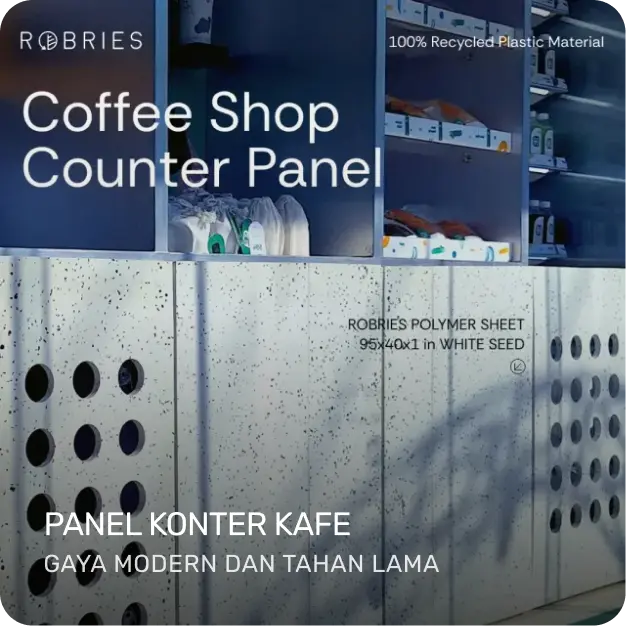
In hotels, cafes, offices, and public spaces, furniture is often custom-designed to align with the interior concept and brand identity. Through the custom process, designers define dimensions, form, color, and integration; producers ensure quality and commercial durability standards are met.
Workflow and production lead time
Recycled material offers unique visual potential to leverage in collaboration: recycled-surface tables, modular chairs, communal benches, and custom interior elements. Robries supplies spec-ready sheets; custom cutting typically needs a 2-4 week lead time depending on volume, with a firm estimate given in the proposal.
Four stages: from briefing to installation
Custom furniture projects generally pass through several stages: needs and concept briefing, shop-drawing development, material and color selection, production/cutting, and installation. At each stage, communication between designer and producer determines the outcome. A clear briefing on function, dimensions, load, and aesthetics upfront reduces costly revisions at the final stage. Robries provides spec sheets and samples to support these early stages.
Balancing custom and cost efficiency
Full customization offers maximum design control but can raise cost and lead time. A smart approach balances custom elements with standard components. For example, using standard sheet sizes (95×40, 100×50, 120×60 cm) for surfaces while customizing legs or modular configuration. This strategy keeps the project’s unique character while maintaining production and budget efficiency.
Managing the timeline and revision expectations
Brands with many branches — cafe chains, hotel networks, or multi-location retail — need furniture that is consistent yet still producible at scale. A good custom furniture service can develop a single master design then replicate it across locations with documented specifications. This combines consistent brand identity with procurement efficiency for expansion.
What determines a custom project’s success
As a practical summary: The custom furniture service combines designer vision and production expertise for commercial projects, with a custom lead time typically 2-4 weeks depending on volume. To validate whether the material fits your project needs, the most effective step is to assess it directly — Robries provides a free physical sample plus a technical spec sheet delivered to your studio or project site within 3 working days, with no purchase obligation. With a sample in hand, design and procurement teams can evaluate color, texture, weight, and dimensional fit before making a budget decision. An early discussion of volume, dimensions, and timeline also helps the material team prepare an accurate estimate and maintain consistency across orders.
Managing deadlines and revision rounds
Clear communication from the start reduces friction in custom projects. Agreeing on the number of revision rounds, shop-drawing approval deadlines, and production milestones helps both parties hold the timeline. For deadline-tight projects like a cafe or hotel opening, planning the 2-4 week production lead time from the outset prevents delays at the final installation stage.
Custom at scale for multi-location brands
A good custom furniture service runs through four clear stages. (1) Briefing: defining function, dimensions, load, aesthetics, and timeline—a clear brief upfront reduces costly revisions later. (2) Shop drawing: the designer sets dimensions, form, color, and interior integration; the producer verifies production feasibility. (3) Production/cutting: material is cut and finished per the drawing, with a lead time typically 2-4 weeks depending on volume. (4) Installation: on-site fitting. Mapping all four stages early helps client and producer hold the timeline—crucial for deadline-tight projects like a cafe or hotel opening.
One master design, many branches
Full customization gives maximum design control but can raise cost and lead time. A smart approach balances custom elements with standard components—for example using standard sheet sizes (95×40, 100×50, 120×60 cm) for surfaces while customizing legs or modular configuration. For multi-location brands (cafe chains, hotel networks, retail), the most efficient approach is developing a single master design then replicating it across branches with documented specifications. This combines brand identity consistency with procurement efficiency for expansion—one design, many locations, uniform quality.
Starting custom furniture with Robries
Robries supports custom furniture projects from briefing to production, combining quality recycled material with technical support. Material is available in standard and custom sizes, with a production lead time typically 2-4 weeks depending on volume. For hotel, cafe, office, or public-space projects, our team is ready to prepare a proposal and estimate. Contact us to get started.
Typically 2-4 weeks for custom cutting, depending on volume. A firm estimate is provided in the proposal after understanding project needs.
Dimensions, form, color, and integration with interior elements — for tables, modular chairs, communal benches, reception desks, and statement elements.
Hotels, cafes, offices, and public spaces needing furniture aligned with the interior concept and brand identity.
Combine custom elements with standard components — for example use standard sheet sizes for surfaces while customizing legs or modular configuration. This keeps unique character while maintaining budget efficiency.
Yes. A single master design can be developed then replicated across branches with documented specifications, combining brand consistency with procurement efficiency for expansion.