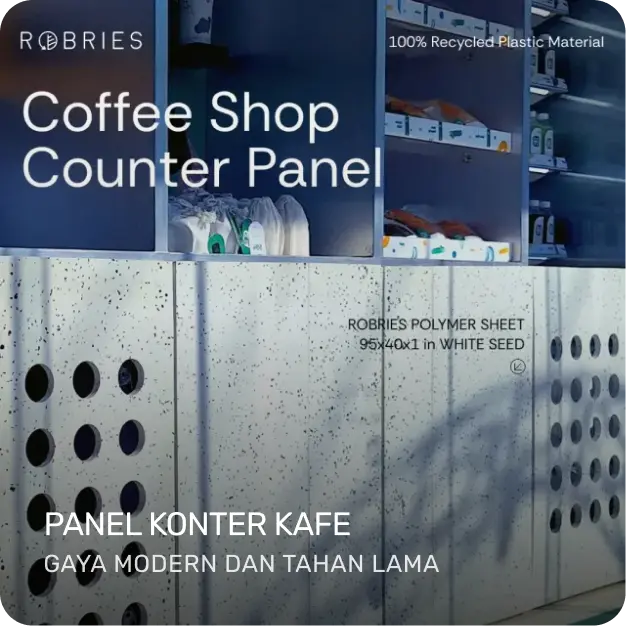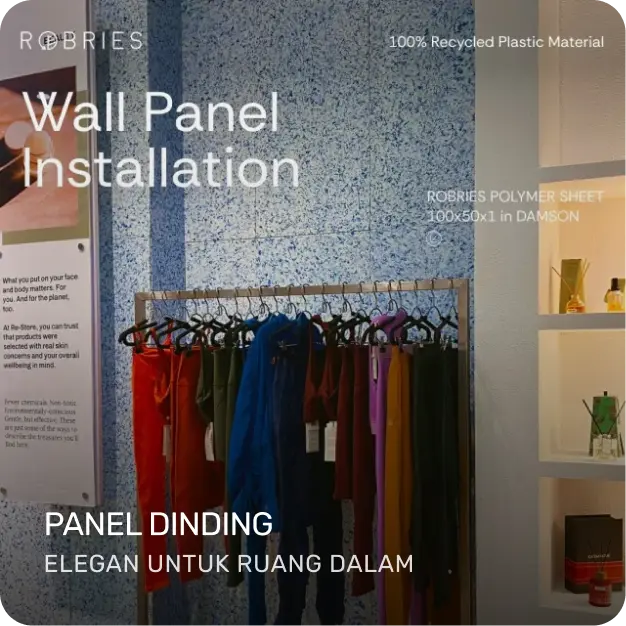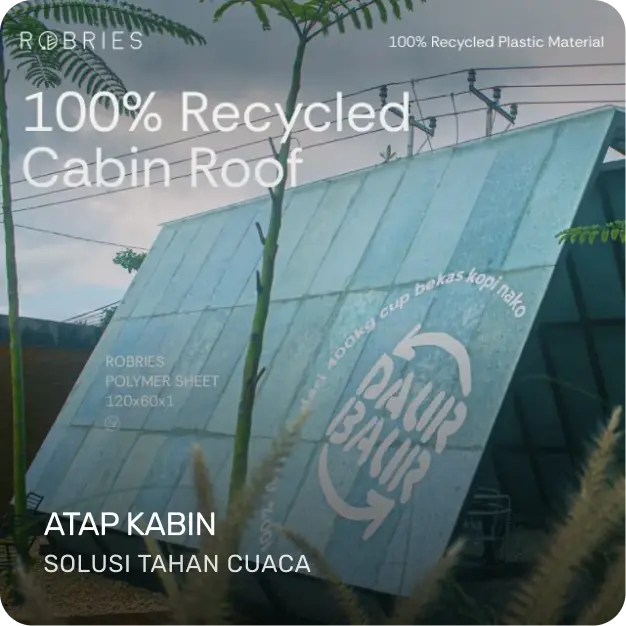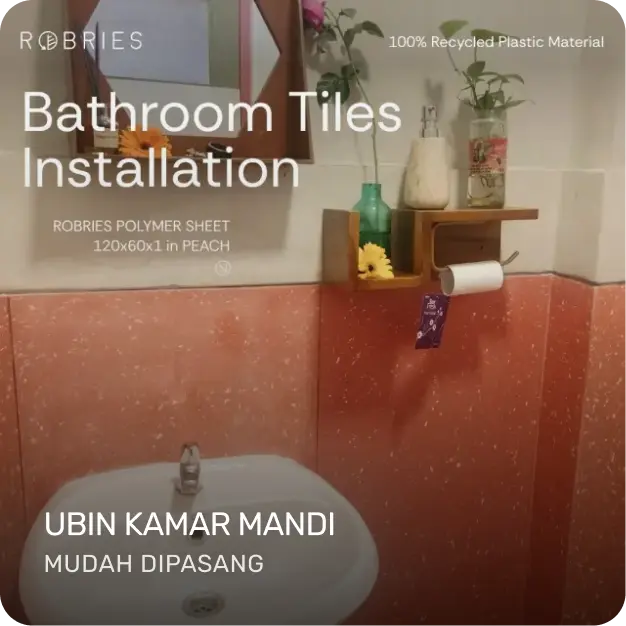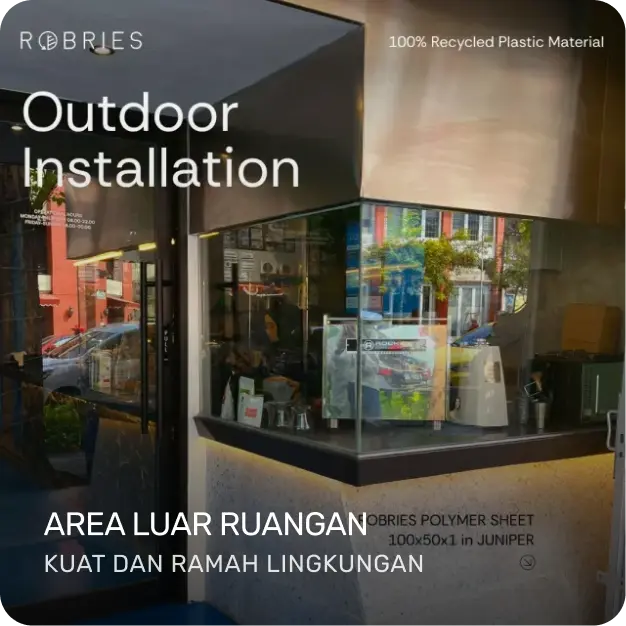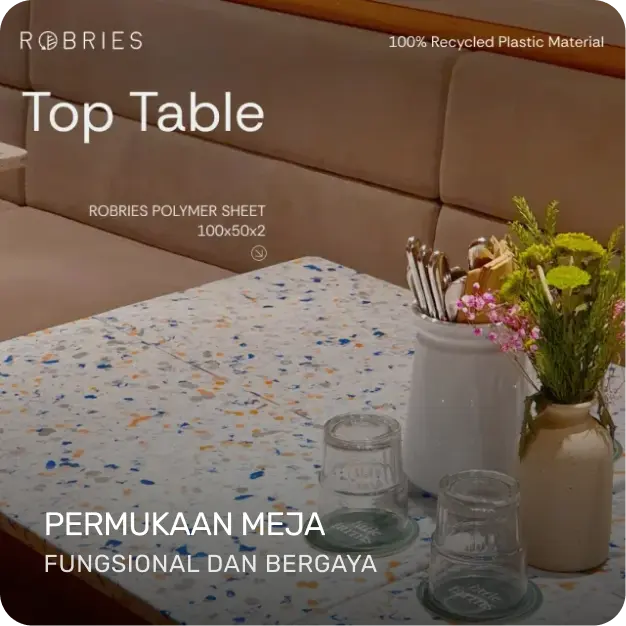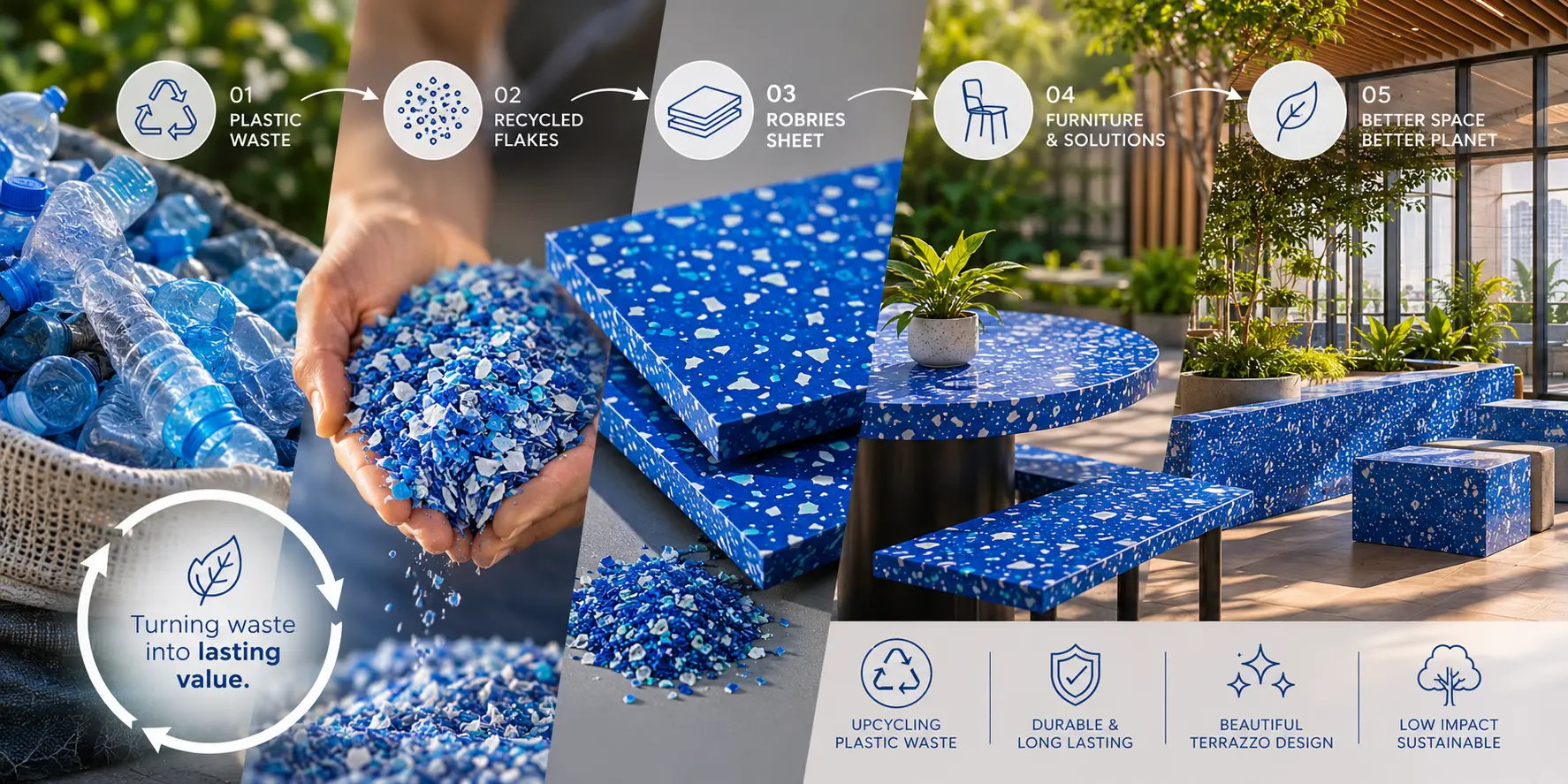

The plastic circular economy shifts the linear pattern (produce-use-dispose) into a cycle (produce-use-reprocess reproduce). Plastic waste is collected, sorted, cleaned, shredded, then heated and molded into panels or sheets for furniture. The result is uniquely patterned material (terrazzo, marbling) with functional and aesthetic value. Robries applies this principle, turning plastic waste into recycled sheets for long-life furniture and interiors.
From waste to a new resource
Plastic was long seen as one of the biggest environmental challenges. Through circular design, plastic waste is no longer viewed as something to discard but as a resource reusable within the production cycle — turned into products with functional and aesthetic value, including furniture.
What the circular economy means for design
Unlike the linear system (produce – use – dispose), the circular economy creates a sustainable cycle: produce – use – reprocess – reproduce. For plastic, this means material that was once waste is reprocessed into new material.
How waste turns into product
The stages: collecting and sorting plastic by type, cleaning off contamination, shredding into small pieces, then heating and molding into sheets or material blocks. The result is recycled plastic panels ready for furniture production.
The design potential of recycled material
This material yields unique patterns (terrazzo, marbling, color mosaic) with an aesthetic identity distinct from conventional materials. Two main benefits: reducing plastic waste and creating products with new economic value — a concept increasingly relevant to commercial industries like cafes, hotels, and offices.
Indonesia’s context: problem and opportunity
Indonesia is among the countries with high plastic consumption, and suboptimal waste management means much of it ends up in the environment. This context makes the plastic circular economy not merely an imported global trend but a relevant response to a local problem. Processing domestic plastic waste into valuable design material creates a new value chain while reducing environmental burden — a model combining ecological and economic impact.
Upcycling vs downcycling: the difference matters
Not all recycling is equal. Downcycling yields material of lower quality than the original, while upcycling creates higher-value products. Turning plastic waste into aesthetically valuable furniture and design panels is a form of upcycling — low-cost waste becomes a product with high functional and visual value. This understanding matters for businesses wanting to communicate the true impact of their material choices.
The consumer’s role in closing the loop
The circular economy does not stop at the producer. Consumers and businesses close the loop by choosing recycled products, maintaining them for long life, and returning them to the cycle at end of life. For commercial businesses, choosing furniture from recycled material is a procurement decision that directly contributes to demand for circular material — a market signal that drives more innovation in the industry.
Circularity in one recap
As a practical summary: The circular economy turns plastic waste into valuable furniture through a produce-use-reprocess cycle, combining environmental impact with new economic value. To validate whether the material fits your project needs, the most effective step is to assess it directly — Robries provides a free physical sample plus a technical spec sheet delivered to your studio or project site within 3 working days, with no purchase obligation. With a sample in hand, design and procurement teams can evaluate color, texture, weight, and dimensional fit before making a budget decision. An early discussion of volume, dimensions, and timeline also helps the material team prepare an accurate estimate and maintain consistency across orders.
Five stages from waste to furniture
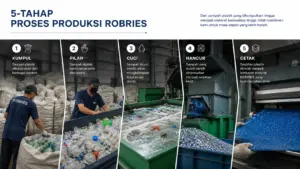
The plastic circular economy is not an abstract concept—it runs through concrete stages. (1) Collection: plastic waste is gathered from sources like bottle caps, crates, and packaging. (2) Sorting: separated by type (HDPE, LDPE) because each type determines final strength. (3) Washing: contaminants are removed to preserve quality. (4) Shredding: plastic is cut into small flakes. (5) Heating & molding: flakes are melted and molded into solid sheets or panels. The result is uniquely patterned material ready to be processed into furniture—turning low-cost waste into a product of high functional and aesthetic value (upcycling, not downcycling).
Why business is part of this cycle
Indonesia is among the countries with high plastic consumption, so the plastic circular economy is a relevant response to a local problem, not merely an imported trend. Processing domestic waste into design material creates a new value chain while reducing environmental burden. But the cycle does not stop at the producer: consumers and businesses close the loop by choosing recycled products, maintaining them for long life, and returning them to the cycle at end of use. For commercial businesses, choosing furniture from recycled material is a procurement decision that becomes a market signal—driving more circular-material innovation in the industry.
The circular economy Robries practices
Robries is a real-world example of the circular economy in action: collecting plastic waste and turning it into valuable design material for furniture and interiors. Every Robries Polymer Sheet reuses plastic that would otherwise become waste, and the material itself can be recycled again at end of life. Learn how our material can support your project’s sustainability commitment.
An approach that shifts the linear pattern (produce-use-dispose) into a cycle where plastic is reprocessed into new material, extending its useful life rather than ending as waste.
Through collection, sorting, cleaning, shredding, then heating and molding into sheets/panels that are then shaped into furniture and interior elements.
Two benefits: reducing the amount of plastic waste and creating products with new economic and aesthetic value.
Downcycling yields lower-quality material than the original; upcycling creates higher-value products. Turning plastic waste into design furniture is upcycling — cheap waste becomes a product of high functional and aesthetic value.
By choosing products from recycled material, maintaining them for long life, and returning them to the cycle at end of use. This procurement decision becomes a market signal that drives circular-material innovation.