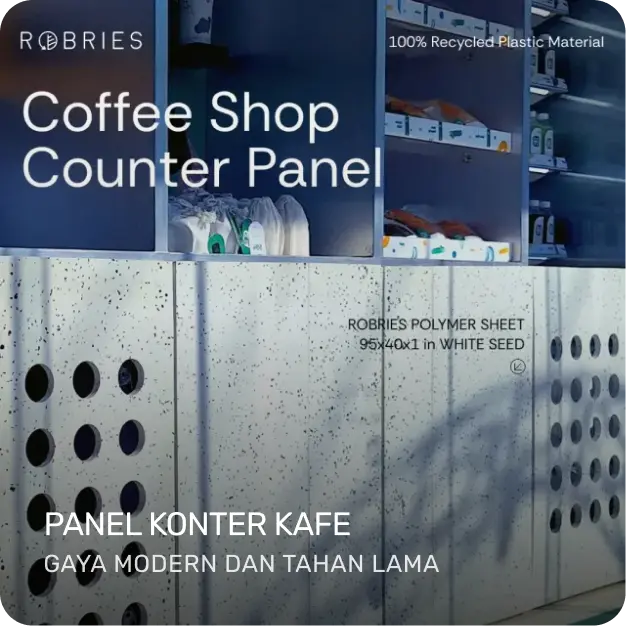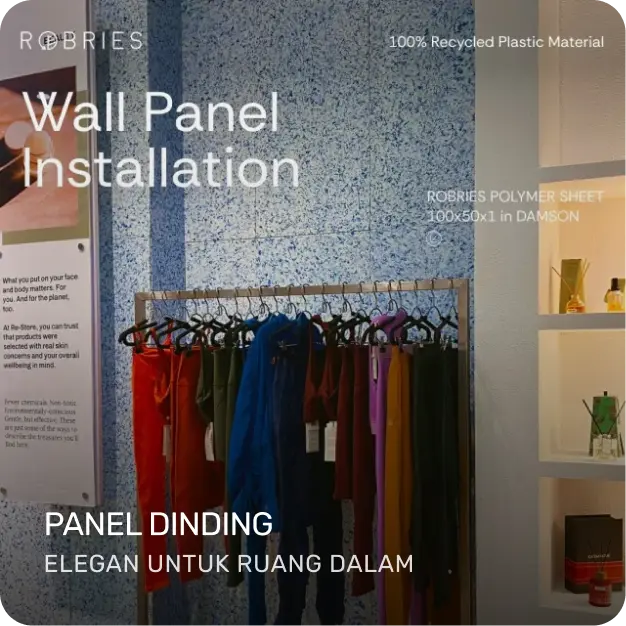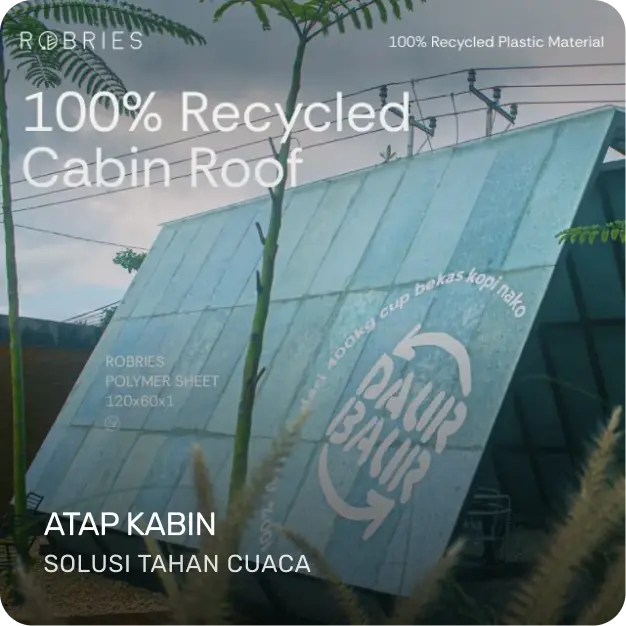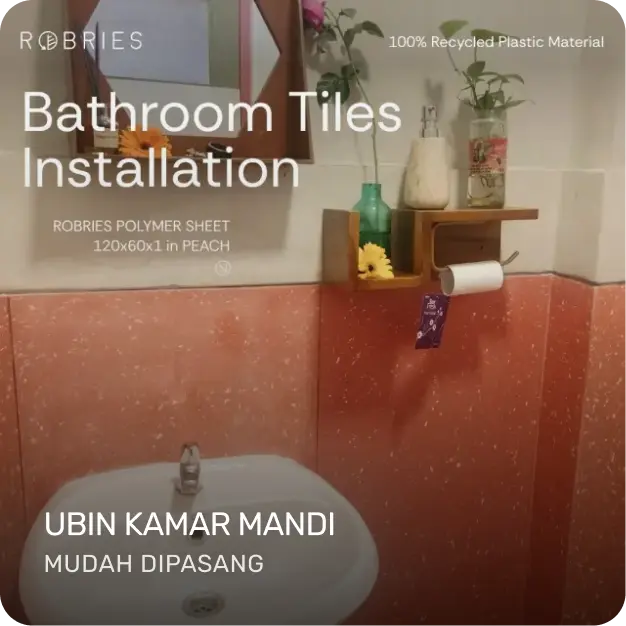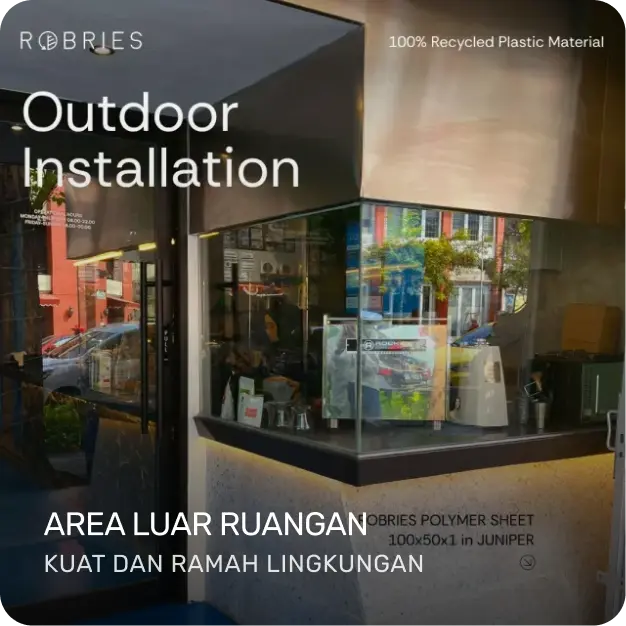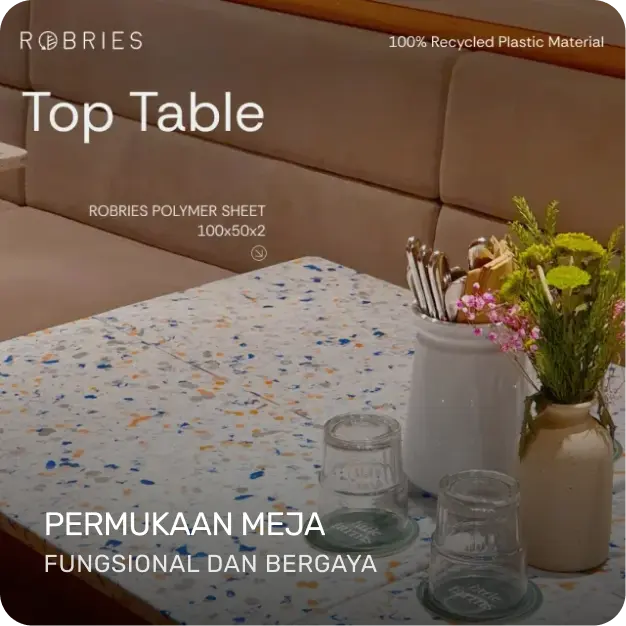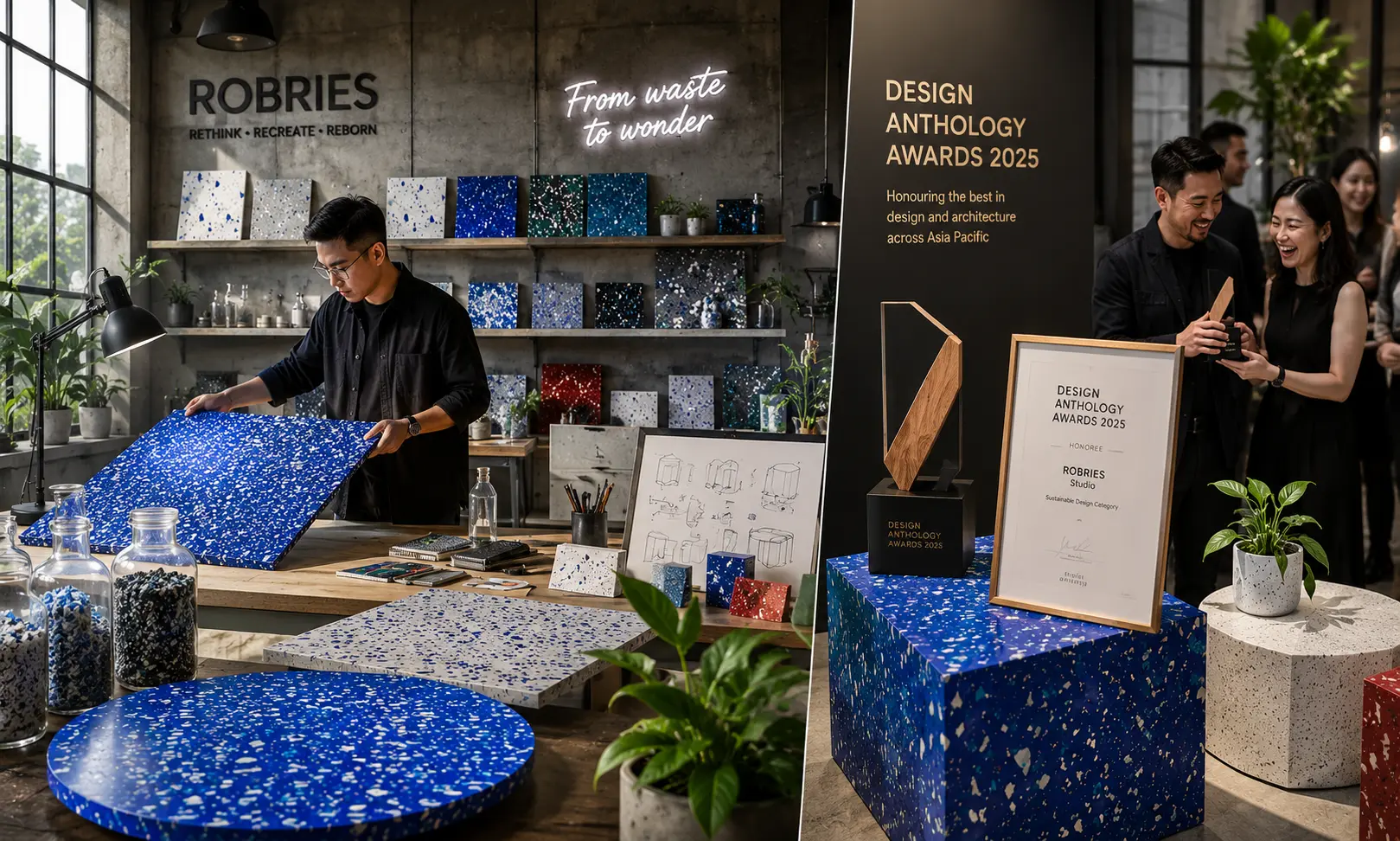

A recycled plastic design studio in Indonesia plays a dual role: material processor and design exploration hub that turns plastic waste into high-value products. They develop textures, colors, patterns, and production techniques through designer-producer collaboration. With abundant plastic waste and a growing creative industry, studios like Robries — recognized by the Design Anthology Awards 2025 — have potential to reach international markets (Singapore, Malaysia, Australia).
A new wave of sustainable design in Indonesia
Indonesia’s design industry is growing alongside environmental awareness. Design studios focused on recycled plastic material have emerged — not mere processors but design exploration hubs that turn plastic waste into high-value products, reflecting a shift in how waste is viewed.
The studio’s role in material innovation
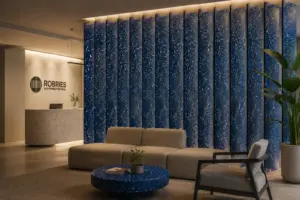
Unlike mass production focused on efficiency, design studios explore new possibilities: developing textures, experimenting with colors and patterns, production techniques, and applications in furniture and interiors. The result is material that is functional and high in aesthetic value — part of contemporary design in Indonesia and globally.
When designers and producers collaborate
A key factor in this growth is collaboration: designers bring creative vision, producers master production and material processing. Collaboration yields products combining attractive design, good material quality, and long-term durability — often custom-designed for specific space needs.
The opportunity for Indonesia’s design industry
Indonesia has great potential: abundant used plastic and a growing creative industry. Supporting factors include environmental awareness, creative communities, and demand for sustainable products. With the right support, studios like Robries can reach international markets.
Awards and publications that build credibility
For material design studios, external recognition becomes an important quality marker. Robries, for instance, was recognized at the Design Anthology Awards 2025 and connected with networks like The Incubation Network. Such awards and publications are not mere prestige — for prospective B2B clients and architects, industry recognition serves as proof that the material has been assessed by a credible third party, reducing perception risk when choosing a relatively new material.
From local market to regional export
Indonesian design studios based on recycled material have a double advantage: access to a large domestic plastic-waste supply and competitive production cost. Some have reached regional export markets such as Singapore, Malaysia, and Australia. This expansion shows that quality recycled material from Indonesia can compete internationally, not only serve domestic demand.
What it means for architects and brands
For architects and brands, the rise of local recycled-material studios means easier access to sustainable material with direct technical support — no need for imports with long lead times. Proximity to the producer also enables closer custom collaboration: designers can visit the workshop, see the process, and develop specifications together with the production team.
The crux of the material-studio shift
As a practical summary: Indonesia’s recycled plastic design studios, with recognition like the Design Anthology Awards 2025, combine material innovation and collaboration to reach regional markets. To validate whether the material fits your project needs, the most effective step is to assess it directly — Robries provides a free physical sample plus a technical spec sheet delivered to your studio or project site within 3 working days, with no purchase obligation. With a sample in hand, design and procurement teams can evaluate color, texture, weight, and dimensional fit before making a budget decision. An early discussion of volume, dimensions, and timeline also helps the material team prepare an accurate estimate and maintain consistency across orders.
Authority proof: awards, clients, export
A material studio’s credibility is built on external proof, not self-claims. Robries was recognized at the Design Anthology Awards 2025—a marker that its design quality and material innovation have been assessed by a credible third party. [ISI: name brands/clients worked with]. The studio is also connected with networks like The Incubation Network. Such proof matters for prospective B2B clients and architects: industry recognition reduces perception risk when choosing a relatively new material, and forms a trust foundation before a large project begins. [ISI: actual export market coverage—Singapore/Malaysia/Australia—with evidence].
The upside of working with a local studio
The rise of local recycled-material studios changes how architects and brands access sustainable material. First, easier access without long import lead times—material is domestically available with direct technical support. Second, closer custom collaboration: designers can visit the workshop, see the production process, and develop specifications with the production team. Third, lower transport carbon footprint than imports. For brands building sustainable positioning, working with an internationally recognized local studio also strengthens a ‘supporting domestic innovation’ narrative—added value appreciated by consumers and corporate clients.
Getting to know Robries
Robries is an Indonesia-based material design studio turning plastic waste into Robries Polymer Sheet — valuable material for furniture and interiors. Recognized at the Design Anthology Awards 2025 and trusted by various brands, Robries combines material innovation with technical support for both local and export projects. Learn more about our material and projects.
A design studio explores the creative possibilities of material — texture, color, pattern, technique — not just production efficiency, yielding products with high aesthetic value.
Yes. With abundant plastic waste and a growing creative industry, Indonesian studios can reach international markets such as Singapore, Malaysia, and Australia.
Robries was recognized at the Design Anthology Awards 2025, signaling internationally acknowledged design quality and material innovation.
External recognition like the Design Anthology Awards serves as third-party proof that the material has been credibly assessed, reducing perception risk for clients choosing a relatively new material.
Easier access to sustainable material with direct technical support, without long import lead times, plus closer custom collaboration opportunities with the production team.