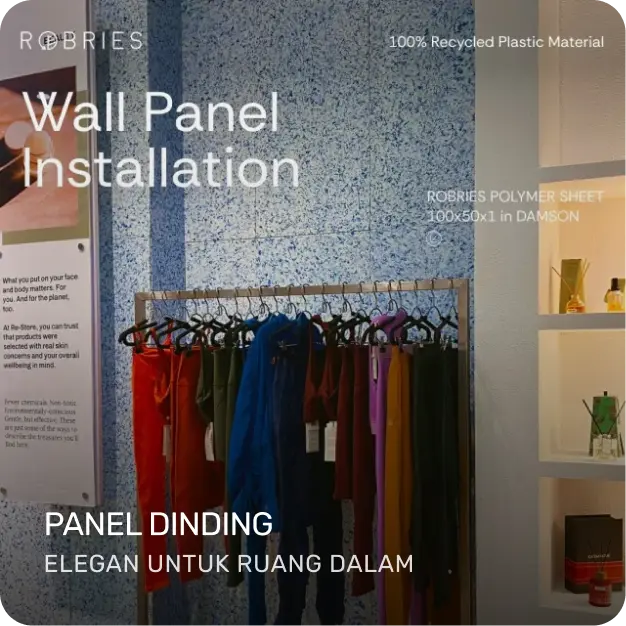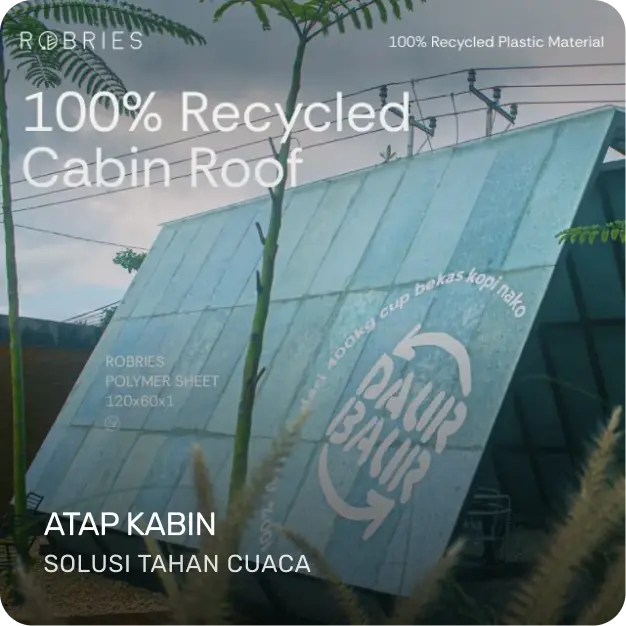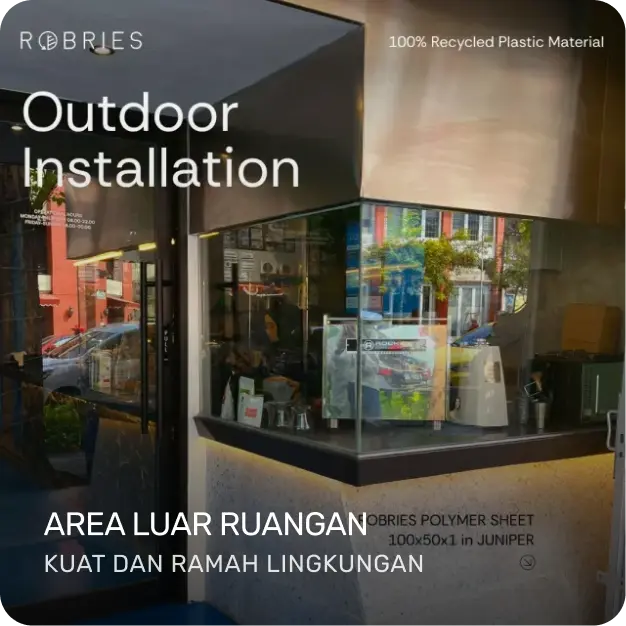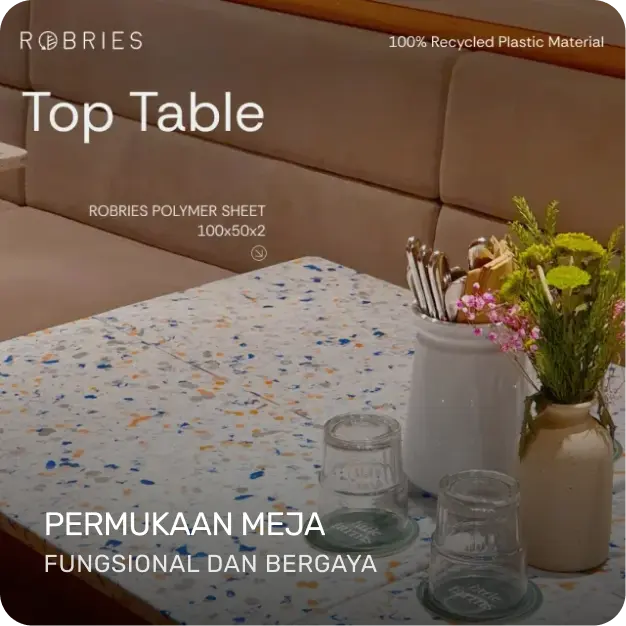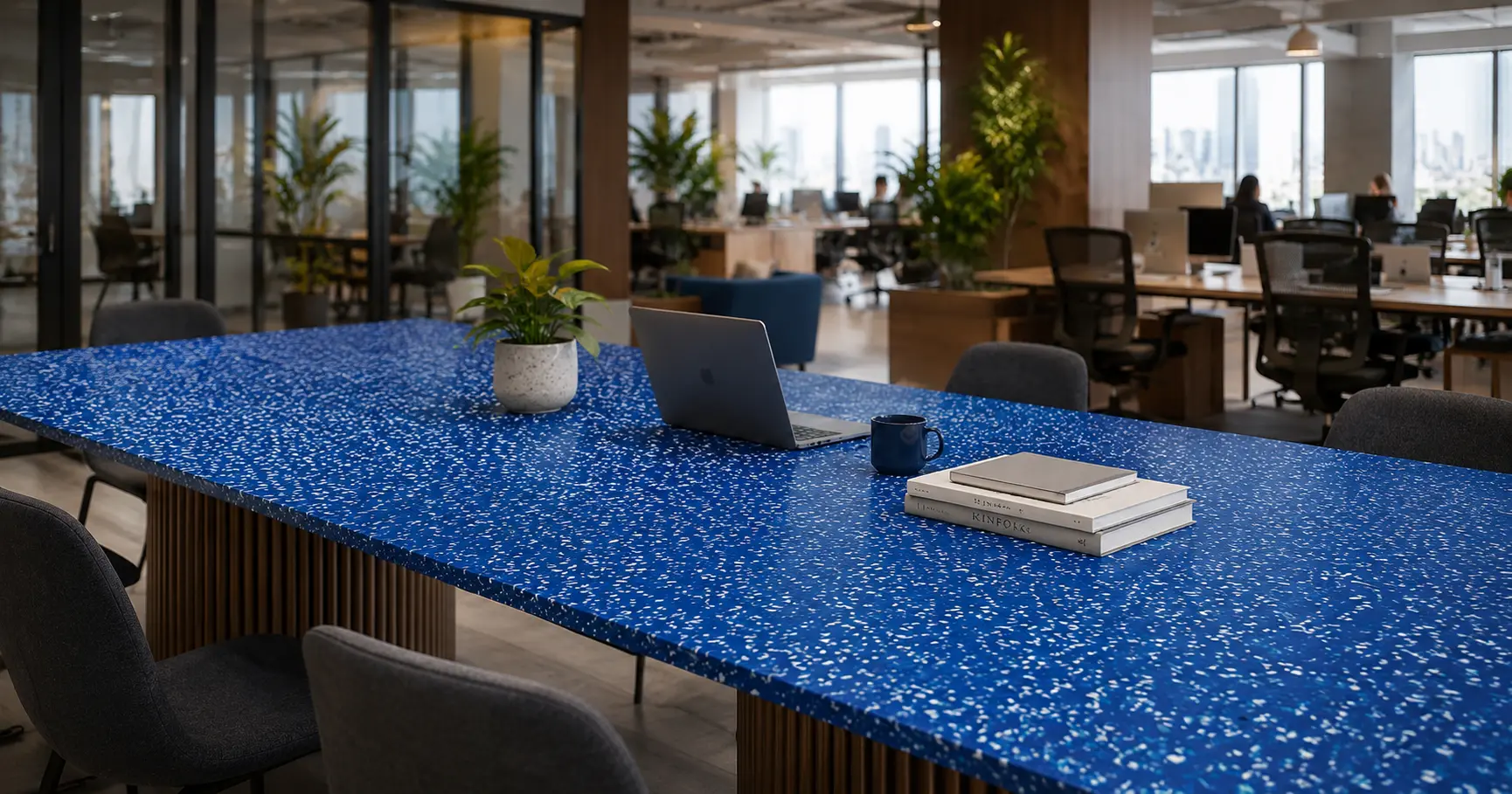

Sustainable office furniture from recycled plastic (HDPE) offers durability for intensive daily use, moisture resistance, and easy maintenance, while supporting a company's ESG strategy. It also brings unique aesthetics (distinctive color patterns) to communal desks, meeting tables, and decorative panels — reinforcing brand identity and a sustainable work culture. Robries makes spec-ready sheets customizable to office interior concepts.
How companies are rethinking the workspace
Companies no longer focus only on space efficiency but also on comfort, brand identity, and environmental impact. Many organizations adopt eco-friendly office furniture, including recycled plastic, to lower their footprint while creating workspaces that reflect modern values.
Why companies choose sustainable furniture
Many companies fold sustainability into their Environmental, Social, and Governance (ESG) strategy. Furniture from recycled material becomes a concrete step toward responsible business practice while strengthening the image of an environmentally conscious organization.
What makes it hold up to daily use
Recycled HDPE offers durability for intensive daily use by many employees, cleans easily since it does not absorb liquids, and resists moisture — suitable for desks, benches, and interior elements in areas with high air circulation.
Aesthetics that reinforce work culture
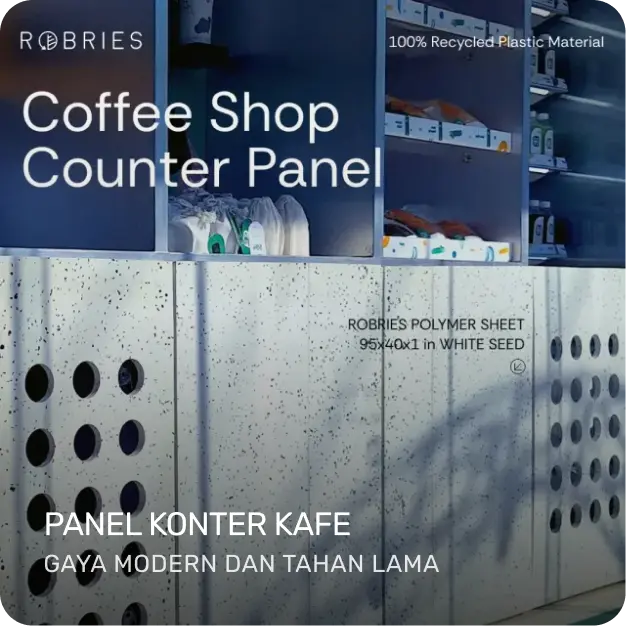
Unique color patterns from mixed plastics create a distinct look for communal desks, meeting tables, and decorative panels. A workspace designed with responsible materials becomes a symbol of the company’s approach to the future — and can increase employee engagement.
Meeting sustainable-procurement targets
More companies set sustainable procurement policies requiring a percentage of recycled material in purchases. Recycled plastic office furniture helps facilities and procurement departments meet these targets with clear documentation. For multinationals reporting to global standards, 100% recycled material with a traceable footprint becomes an asset in annual sustainability reporting.
Furniture for an ever-changing workspace
The modern workspace trend moves toward flexible layouts — hot desking, collaboration areas, and reconfigurable spaces. Lightweight yet strong recycled plastic furniture supports this mobility. Desks and modular elements can be moved and rearranged without damage, and resistance to intensive use makes them suitable for spaces that frequently change function.
Its effect on employee engagement
Workspaces designed with responsible materials can shape employees’ perception of company values. Workplace surveys show younger generations increasingly weigh an employer’s environmental commitment. Tangible visual elements — like a communal desk from recycled material — become a daily reminder of those values, strengthening engagement and pride in the workplace.
A brief note for facilities teams
As a practical summary: Sustainable office furniture from recycled plastic supports ESG goals and sustainable procurement policies while bringing unique aesthetics to modern workspaces. To validate whether the material fits your project needs, the most effective step is to assess it directly — Robries provides a free physical sample plus a technical spec sheet delivered to your studio or project site within 3 working days, with no purchase obligation. With a sample in hand, design and procurement teams can evaluate color, texture, weight, and dimensional fit before making a budget decision. An early discussion of volume, dimensions, and timeline also helps the material team prepare an accurate estimate and maintain consistency across orders.
Rolled out in phases, area by area
Companies need not replace all furniture at once. A phased approach—starting with the most visible collaboration areas or meeting rooms—lets facilities teams assess performance and employee response before scaling office-wide. This is also more budget-friendly and gives time to standardize the specifications to be replicated in later phases.
Furniture by zone: desks to acoustic partitions
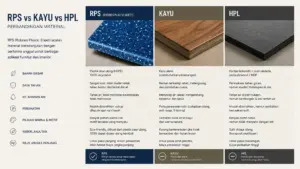
The modern workspace consists of zones with different functions, and recycled material can be tailored for each. At workstations and desks, RPS’s scratch-resistant, easy-clean surface supports intensive daily use. In collaboration areas and lounges, communal tables with unique patterns become a visual focal point reinforcing an open culture. In meeting rooms, large RPS tables convey a professional yet sustainable impression. In partitions and acoustic elements, RPS panels can be mounted with an air gap to help manage open-plan noise. This zone mapping helps facilities allocate material to functional needs.
Certification and a traceable material footprint
Many companies now set sustainable procurement policies with recycled-content targets. Office furniture from 100% recycled RPS helps facilities departments meet these targets with clear documentation, and can contribute to material credits in green building certification schemes. For companies reporting to global ESG standards, material with a traceable footprint becomes an asset in annual reporting. Phased implementation—starting with the most visible collaboration areas—lets the team assess performance before scaling office-wide while protecting the budget.
Fitting out a workspace with Robries
Robries provides spec-ready recycled material for work desks, meeting tables, and office interior elements. The 100% recycled material comes with documentation that can support sustainable procurement policies and corporate ESG reporting. Suited to phased implementation, from collaboration areas to the whole office. Discuss your workspace concept with our material team.
Yes. Recycled HDPE is built for intensive daily use by many employees and resists moisture, suiting work desks, meeting tables, and interior elements.
It reuses plastic waste, becoming a concrete step on the Environmental pillar of an ESG strategy while strengthening company image.
Yes. Sheets can be produced custom for work desks, collaboration areas, meeting tables, and interior elements aligned to the brand concept.
Yes. The 100% recycled material with clear documentation helps procurement departments meet recycled-content targets and supports a company’s annual sustainability reporting.
Yes. Lightweight yet strong material supports hot-desking and collaboration-area mobility; modular elements can be moved and rearranged without damage.